Showing posts with label CRM. Show all posts

Wednesday, December 14, 2016

Eight Gartner Building Blocks

On the eighth day of Christmas, my truelove gave to me... Information on how Charities Could Use Gartner's 8 Building Blocks of CRM Framework


For larger (and probably also mid-size) charities looking to implement a new CRM system, and who want to understand the implications of CRM other than technology on their organisation, then you could certainly take a look at Gartner's "Eight Building Blocks of CRM" framework.

This is a toolkit which forms a framework that contains the elements which Gartner define as necessary for a successful CRM initiative: vision, strategy, customer experience, organisational collaboration, processes, information/insight, technology and metrics.They emphasise that all eight building blocks are essential for successful CRM but key is the fact that only one of the eight blocks involves technology, which underlines the importance of viewing CRM as a business strategy.

I also like Gartner’s Definition of CRM: "CRM is a business strategy with outcomes that optimize profitability, revenue and customer satisfaction by organizing around customer segments, fostering customer-satisfying behaviours and implementing customer-centric processes. CRM technologies should enable greater customer insight, increased customer access, more-effective interactions, and integration throughout all customer channels and back-office enterprise functions." Replace 'customer' with 'supporter' and remove profitability and that's a good definition for charities too.

I won't go into each building block here - far better for you to read their approach yourself if you are interested. But I will quote one more thing from their report which I also agree with: "True CRM isn’t easy. It requires board-level vision and leadership to drive a “relentless focus on the customer”; otherwise, it will remain fragmented. It involves potentially difficult changes to processes, culture and organization that can make the technology support seem easy." Well said.

- - -

The original Gartner paper is available on Gartner's website, but you can also find the report as a download on various websites as part of other reports. One example is the CustomerThink website.


Tuesday, December 06, 2016

Two CRM Giants - Now Good Options for Larger Charities Too

On the second day of Christmas, my truelove gave to me... A brief discussion on Microsoft Dynamics 365 and Salesforce.


When I started this blog in 2009, I wrote that I was still reserving judgement on whether Microsoft Dynamics CRM and Salesforce were truly valid options as fundraising systems for charities, especially larger NFP organisations. Since then, I have watched the changes in both systems and there is now little doubt that - implemented well - both platforms now can support charities with their fundraising requirements.

There are good reasons for this: not only has their functionality and configurability improved, and there are now 'NFP templates' which can sit on both platforms, but equally as important (maybe more so), there are increasingly a number of implementation business partners who work with these platforms who now have got a good understanding of the software and fundraising – and that was definitely lacking just a few years ago. Of course, both systems also have excellent software licensing costs for charities (not the be-all-and-end-all of any procurement, but it still helps) and they are almost always recognised by key research companies such as Gartner and Forrester as being amongst the top CRM players.

And although there have been a constant number of small to mid-size charities implementing both systems for fundraising over the last five years, the last couple of years has also seen the first large NFPs go-live with their fundraising implementations on these platforms: first, Barnardo's on Salesforce and then WaterAid on Dynamics. And there are at least a couple of other large charities who I believe should go-live on those platforms in 2017.

They are also terrifically flexible and configurable, so you can of course use them for more than just fundraising if you want to. Indeed, most implementations of both systems were not for fundraising in their earlier versions.

Of course, there are still challenges, most notably the concern of cost for large volumes of data if you go on a Cloud version, and performance for large data-sets for some operations should always be considered (Although, as I have written before, I would question if you do still need all your data online).

And there is still a lot of hype about Salesforce and other CRM Systems (and there are of course alternative CRM platforms to Dynamics/Salesforce) and so don't just go and buy a CRM blindly. Remember that they are not the only option for fundraising: there are also several very good proprietary software solutions which have been designed specifically for the charity sector. So you do need to decide which is right for your requirements.


Tuesday, February 10, 2015

What Small Charities Need to Know about CRM Systems: Free ebook

I have just published a new, free ebook:  What Small Charities Need to Know about CRM Systems. Buying a new CRM system or fundraising database can be a daunting experience for any NFP organisation, let alone a small charity. And although I publish a lot of information on this blog which I hope is useful for all charities, there are some points which I think smaller organisations need to particularly be aware of or specifically consider. So I have brought these issues together into a new, free ebook.

Which in some ways was quite difficult! Because when I read back over my blog posts, so many more of them are equally appropriate for small charities too! I have therefore limited myself to just twelve areas which I believe should give a small charity a solid understanding of what they need to know about CRM systems and fundraising databases. But if you want to know more, then there's lots more on all my other blog posts.

Who this Book is Intended For
The book has been produced for people whose day job is not the procurement or implementation of new databases - which for small charities is probably almost everyone! And you do not have to be technical to understand it. It is for fundraising managers, chief executives, trustees, fundraisers, office managers, volunteers and those working in supporter services, but of course I hope it is equally useful for database staff and charity IT staff too.

If there are any points you think I should have included in this book then feel free to add them in the comments below.

How to Download the Book
You can download the book from my website: http://www.itforcharities.co.uk/free-ebooks/.

Tuesday, February 03, 2015

Are charities really ready yet to take full advantage of CRM platforms?

ready (or not) 

So often during procurements and marketing pitches, the undoubted benefits of CRM systems are laid out by suppliers for charities. This is understandable and correct - why shouldn't charities know what they could be achieving and the benefits of such platforms.

However, I sometimes wonder if most charities, or even some are really ready to take full advantage of such technology. I don’t mean from a fundamental or standard operational angle, clearly those systems have every chance of giving charities what they want for the start of any such project. But how many organisations have the people, the time, the resources, the clarity, the strategy, even the budget to really take it a step further after the initial implementation?

This is not because I don't think that charities don't want to, I'm sure they do, and not because they don't have the vision or understanding. Again, I am sure some charities do and I hope such organisations are getting the tremendous benefits which such systems can bring.  But I wonder if that is still done by just a minority of NFP organisations.

Why not?
If you consider all those factors listed above then the one over-riding thing which I think has the most impact on this is: People. People are the problem and the answer. Because it is the people which make the difference in taking full advantage of CRM platforms.

Consider skill-sets. Clearly charities have had people supporting their fundraising and similar databases for years but traditional fundraising packages have needed different skill-sets to those which the CRM systems require in order to exploit them to the max. For example, whereas the fundraising packages were in many ways more limited, the CRM systems are almost unlimited in their potential. But to achieve that potential you need someone with Business Analysis skills to be able to find out from the users, the fundraisers not just what they want but to interpret those wishes so that they can be implemented in a CRM system. This is not often something I find in mid-size charities and only sometimes in larger NFPs.

Then you need developers. Sometimes this will only require comparatively fundamental 'admin' type staff who will simply need to configure a CRM system, but for the more powerful and far-reaching benefits you may need specialist developers who can code the systems and get so much more from them. And this will mean new skills, new programming languages and a new understanding of how to get the most from those advances.

All that takes management, planning, different team structures and a different sort of approach to the fundraising packages.

So if you do want and can employ such people, then that means the other factors which will be needed will follow-on: time, budget, strategic vision. If you don't have the right people then there's no need for those other things.

But it's still not necessarily just that...
There's also one more difference which charities need to adopt, and that's a new mindset. Many database managers of the traditional fundraising systems will sadly have become used to being limited to only being able to work within the constraints of those systems, finding workarounds or paying a lot of money to their supplier and even then waiting to get extra work developed for them - or even having to say No to users when they are asked to provide requested functionality.

So to find yourself in a position where you could now theoretically say Yes to so many of the things requested by your users is of course exciting, but it also means knowing how to progress such requests. How should you configure or develop the systems? How should you ensure you are definitely doing what is best? (Don't just do what is asked for immediately - question such user requirements to make sure they are definitely what is really wanted and what will achieve the best results. e.g. Don't just add another tick-box field…). Do too much too quickly and you may introduce confusion or not do things properly; too slowly and it won't have the possible impact it could have. Do it without planning and you could find yourself having to unravel things and start again. Do it without understanding of database development and you could end up with a worse system, more unmanageable than that which you started with.

Don't let any of this stop you from buying and implementing the CRM systems and then developing them. Just make sure you have got the right building blocks in place first. The right people.

Monday, January 19, 2015

Differentiating Suppliers of the Same Software Platform

Twins 

An interesting challenge is arising on CRM platforms. With more and more companies producing 'templates' for fundraising and membership solutions on the same platforms (mostly Dynamics and Salesforce), I am finding that I see quite similar looking software from different suppliers. Which leads me to ask myself: if the platforms are that good and are right for my clients, and the software is starting to blur into the same sort of solution, then how do I distinguish between the different offerings?

First, it's about the supplier
What this shows straight away is the importance and significance of the supplier themselves. i.e. their approach to your project, their empathy with your organisation and staff; the people they employ; their sector knowledge. The added value they can bring to the project and to your organisation. All the usual sort of stuff I discuss frequently on my blog, but with a different level of emphasis because of such a need for comparisons and differentiators.

And that to me is still the most important thing.

But it is the software too
There is more you can also do to look at the software more deeply. Even if it looks similar (which it probably will because it will be on the same platform) it will of course be different when you look closer, especially in the areas of fundraising or membership. Some of the specifics you could consider include:
  • How are the companies actually presenting the core data which you want to see? Is it truly intuitive? Is there flexibility in its presentation? Have they understood how fundraisers want to see and use such data?
  • Look especially more deeply at the most critical parts of the software. For most charities who are doing fundraising this will be the income management. i.e. If a supplier is offering you a solution with some sort of template to manage your cash donations and regular donations, then how have they structured that? Have they used the platform's standard entities? Have they used custom entities? How have they created a system where you can record a pledge and its instalments? How have they created a system which enables you to create a direct debit mandate and then record all the future payments against that? And do they really understand regular giving itself? And how about reporting of this area - that takes some thinking about. This will start to show-up differences and suppliers' comprehension of this crucial area.
  • What about batch entry of income? What about the data entry of more complicated aspects of some fundraising data - e.g. in memory relationships, corporates and their contacts?
  • How have they actually coded the system to process direct debits? Can they manage high volumes - not just your current levels but if you increase them too?
  • Do they understand Gift Aid and how have they linked their system with HMRC's Charities Online?
  • How have they optimised the more common CRM elements for charities' needs? e.g. opportunities, leads. Have they shown how you major donors and HNWI fundraisers could get the most out of such systems?
In addition to all that, you also need to consider how different suppliers are considering the future of your software. Do they see it as a 'product' whereby they will be providing functional upgrades in the future? Or is it just a system which you are buying 'as is' and then build on enhancements as and when you want to? Neither way is right or wrong, it's down to your requirements and wishes. And depending on how you want to develop the system in the future, consider also the intellectual property (IP) aspects of the solutions.

Finally, you'll notice I haven't mentioned cost. So, yes, cost does of course distinguish and separate suppliers, but it's never as simple as saying that the cheaper solution is the one to go for. There is so much more to cost than that! Have a look at my blogs on cost factors and indeed, everything else about procurement.

Monday, January 12, 2015

My Predictions for NFP CRM Systems in 2015

Fortune Teller 

It's that time of year when people predict what's going to happen in the next 12 months and so I thought I would join in. So here goes: these are my predictions for what will happen in the arena of UK NFP fundraising databases and the CRM market in 2015:

1. The increasing adoption of Salesforce and Microsoft CRM Dynamics - especially for the larger charities looking for a new system. In the last 12-18 months, for the tenders for fundraising databases that I know of amongst larger charities, more have been won by a company selling Salesforce or Dynamics - and I think this pattern will continue at the moment. Blackbaud CRM will also be in the mix but it has not been as successful of late here in the UK (outside the Higher Education sector) and ACS's CareNG does not seem to be competing at the same level as the others right now.

So at the moment, for larger charities who are also looking for a development platform, I believe Dynamics and Salesforce will top the sales.

That said, I wouldn't be at all surprised if one or two larger charities implementing CRM systems for fundraising find it tough going. There are still very few sizeable UK charities using such systems for their dedicated fundraising database and I think some may find it takes longer and/or costs more than they expect.
  • As a 'sub-division' prediction on this, I also think that 'templated' versions of Salesforce and Dynamics will grow in popularity - i.e. offerings from third-party suppliers with some built-in charity functionality such as Direct Debit management, Gift Aid etc - both in terms of client adoption and new templates being developed by more companies. Plus Salesforce's own NGO Connect adaptation could be interesting to watch if it is developed for the UK market.
2. The mid-size charity market for fundraising systems will see a battle between Raiser's Edge NXT and Access thankQ CRM. Both Blackbaud and The Access Group are bringing out new products in 2015 as successors to their existing Raiser's Edge and thankQ systems and it will be interesting to see which moves ahead. It looks like The Access Group will release their new offering first so that could give them a head start, but Blackbaud's new technology and financial clout should see them pick up new clients later in the year.

That said, Raiser's Edge NXT still has some questions hanging over it as I have highlighted before in another blog post, so it will be very interesting to see how that does develop.

I also believe that CiviCRM will win deals amongst mid-size charities but it needs one or two more significant implementations in the UK to really get it to be more widely adopted. (And of course Salesforce and Dynamics will also be an option for this level, but for those organisations with 'pure fundraising' needs there would need to be a good reason to be building from 'vanilla' for such systems - hence, again, my prediction for the growth of CRM fundraising templates.)
  •  I also think that Blackbaud's existing Raiser's Edge 7 is not going to disappear for some time. It (like other similar products) still provides solid functionality for charities' operational fundraising requirements, so despite its age and shortcomings it will probably continue to sell for at least this year, and carry on being used for at least the next few years by many existing clients.
3. Extensibility will be increasingly more important. In terms of system flexibility, adaptation and development, charities are now moving on from accepting the limitations that the more traditional fundraising databases have offered historically. The goals, wishes and requirements of fundraisers (and therefore the database team too) means that such restrictions are almost certainly no longer acceptable for mid-size/large NFPs.

Thus the need for the increased power and flexibility of system extensibility has come to the fore. Charities want to be able to change forms and screens, insert entities and fields and add data integrity/business rules etc more easily than they have been able to in the past. And they want to be able to do this themselves, without having to be technical geniuses. But they also want to at least have the option of being able to get down-and-dirty with programming code if they desire to do that and if they are capable of doing so, and to be able to use such code so that they can extend the database beyond what it was originally developed for - but in such a way so that it won't break it in the future when new standard upgrades are released.

The CRM systems are leading the way in this but the new products from Blackbaud and thankQ are catching-up in some (if not all) areas and some degree of extensibility will no longer be a nice-to-have for new implementations.

4. Charities will want to integrate their fundraising/CRM database with their website and other data sources more tightly and with more automation… but they will still find it hard. This fundamental need is not new of course; and my point here is really a bit of an 'anti-prediction' in that although I predict the increasing desire for such integration, I still think it is going to be hard for more automated integration apart for those charities who have a decent budget and good in-house technical skills, or for the more 'common' data sources such as JustGiving.

Ironically, from the point of view of attempting to be Nostradamus, I hope I am wrong about this prediction.

5. Software companies and salespeople will continue to push Mobile/Social Media/Cloud as their innovations. Which is hardly a radical prediction, is it! After all, this is already happening. And of course these technologies do offer the potential of great benefits and the ability to interact with our fundraising/CRM systems.

But why I have highlighted this area is because I want to add that you shouldn't follow these trends blindly and you shouldn't be buying a new system just because it offers such capabilities. Instead, work out why or how such technologies could be used with your database. For example, it is not just a matter of recording tweets in your CRM system (I mean, are fundraisers really going to look through hundreds of tweets on a fundraising database?); it is not just about seeing a supporter's Facebook page from within the CRM (although that can offer some speed of access); and it's not just about accessing your database from your mobile/tablet without a good business reason, no matter how flashy the salespeople make that look. Although, yes, mobile access for event fundraisers at an event, for development staff visiting alumni, for member access - absolutely, that sounds good. So do it where it's right to do so - but not just for the sake of it.


A final note on this: I should add that there are of course many more fundraising databases available (AdvantageNFP, Harlequin, KISSS etc) and CRM systems (Workbooks, SugarCRM etc) - see the itforcharities website for such lists - and my references to the systems above do not mean that they are necessarily right for you or your particular project. If you do look for a new database then you need to do a proper analysis and procurement exercise and select whichever system and supplier is right for your organisation.

Monday, September 15, 2014

When buying CRM systems, do consider multiple business partners for each platform

multiples day 

One of the great benefits of the generic CRM systems (Salesforce, Dynamics, CiviCRM etc) is that there are many business partners for all of them (aka resellers) who could help you implement such systems. But if you are considering such solutions during your procurement and you just have one supplier per platform pitch for your project (e.g. just one Salesforce reseller, one Dynamics reseller etc) then you will be missing out on all sort of possibilities.

For a start, each partner/company of course has their own approach to implementing such software for charities. And if you find that their approach, ethos or people are just not right for your organisation then you could be automatically eliminating 'their' platform but based more on the company than the software/solution. And that might be reducing your options in the wrong way. (Of course, it is quite understandable that you don't select a company because they aren't right for you, but I would suggest you should give yourself scope to understand alternatives apart from said company for said platform).

Then there is their knowledge, skills, background, experience and so on. And their beliefs and ideas as to how best to do such implementations. If you don't look at multiple suppliers for each CRM system then you will only see that system through the eyes of one company, and I think that presents quite a risk for you in not necessarily seeing the best of it - or conversely, understanding its weaknesses.

What if you have a business critical requirement such as processing direct debits or managing online event applications and you hear from just the one supplier that this can't be done on 'their' platform - then should that mean immediately that you can't use that system at all? Or as bad, what if you only select one supplier and they tell you they can easily do that function and then two-thirds down the line it turns out that they can't, then have you wasted an opportunity in understanding that platform better?

Even if you only review two such suppliers for each platform then you will learn so much more from each one, and thereafter even if there is one who you definitely don't want then it is still quite feasible you will learn something from them which you can use with the other business partner. (And even if you don't, then even that will tell you something as to how good and how much more appropriate your chosen partner is!) And remember, as per my recent blog post, you can also consider Pre-Qualifying meetings before short-listing to a final one or two suppliers per system, thus enabling the potential for even more comparisons.

Monday, August 18, 2014

The CRM Alternatives to Salesforce and Dynamics for Charities

2010 - April - 25 - NodeXL - Twitter - crm betweenness color 

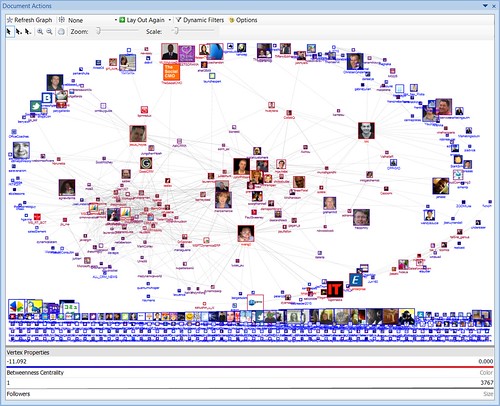
Salesforce and Microsoft CRM Dynamics are both great solutions but when considering 'generic' CRM systems, it is easy to think that they are the only "CRM systems" available to UK charities, which of course is not the case: there are dozens of similar(ish) systems on the market - and there are of course fundraising database packages. That said, there are some CRM systems which are either more oriented towards the NFP sector or where a supplier has specifically created modules for charities, or where one or more business partners have taken the sector seriously enough to have made an impact with what they can provide, and it is those systems which I thought it would be useful to list here for awareness:
  • CiviCRM: CiviCRM has been designed specifically for the NFP market with appropriate functionality and ethos, and is almost certainly the NFP sector's leading open source CRM system, offering collaboration and joint development. And because it is not oriented at just one "type" of solution for charities (i.e. not just service delivery, not just case management, not just fundraising, volunteer management etc) it has a degree of flexibility similar to that which the CRM solutions also offer, if maybe not quite so in-depth. It has a great ethos for charities, and an ever-growing and broadening community using it and supporting other users. And by its very nature it tends to attract users and developers who believe in not just the software but the whole open source approach. But the fact it is not driven by a commercial organisation means that when statutory or regulatory requirements change, then a user and/or the community needs to get the software updated to manage that.
  • Workbooks.com: Workbooks has gained several UK clients in the membership sector and are offering their solution to charities too. It is a web-based (SAAS) solution designed for small and mid-size businesses, so in terms of solution size their NFP offering should fit many charities. Unlike Salesforce/Dynamics, they (primarily) sell direct to end-user organisations.
  • SugarCRM: Sugar has an open-source and a paid-for commercial offering and has had some adoption with charities and the public sector, partly due to its cost structure but partly because it is a decent system with an especially good interface. It can be hosted or run on-premise and is sold and implemented through a partner network. It has perhaps not made inroads into the sector quite as much as the other systems.
  • NetSuite: A large, CRM vendor in the US, they have created NetSuite.org which is the corporate citizenship arm of NetSuite. They offer product donations, pro bono programs and social solutions to charities and NFPs. Not yet as well adopted in the UK compared to North America.
  • Siebel and Oracle: For the largest charities…
  • And a few others which I know some charities have used:
    • Zoho: Free and paid-for versions of their CRM and other online apps.
    • Sage CRM (what was ACT! years ago) has a Windows and a SAAS solution. 
    • Highrise CRM: SAAS software from the people who brought you Basecamp (although more oriented to contact management and maybe service delivery than fundraising).
As I said above, there are of course many other CRM solutions including a number which appear on Gartner's Magic Quadrant which do well in the commercial sector but which (to my knowledge) don't have any charity implementations. It will be interesting to see if any such systems start to also move into the sector and if any of those in the above list can challenge Salesforce and Microsoft CRM with leading sector offerings.

Monday, August 11, 2014

Why CRM Systems Are Like Icebergs for Charities

Antarctic Iceberg 

There is no doubt that the adoption of the generic CRM systems like Salesforce and Dynamics is increasing amongst charities and NFPs. But in comparison to the commercial sector we are still learning about the use of them. And in comparison to traditional fundraising databases (Raiser's Edge, thankQ et al) we still know less about them. Consequently, although there are definite benefits which the CRM systems bring, there may still be issues which we don't yet know about.

Bring on the iceberg...

My iceberg theory…
The fundraising database packages have of course been around for many years. Many organisations have implemented them, many people have implemented them at multiple charities and of course the suppliers have huge experience of them. And they have a more defined scope.

So we know many of the potential risks and issues with such systems (as well as the benefits of course) and when we start an implementation we can attempt to plan for and mitigate such risks. And even though there will inevitably be new risks/issues which occur during an implementation, I could have a good guess at some of the areas that some of those might occur within.

Whereas the opposite is true for the CRM systems - at least in the specific and critical area of fundraising. Because although there are of course existing charities who have implemented Salesforce, Dynamics et al for their fundraising needs, in comparison to the fundraising packages the number is still low. And those that have done may well have used different approaches to each other and very different configurations of such systems.

This is partly because of their newness, but also because of their flexibility, options, configurability and the breadth of functionality in the base platform. You (we) don't learn that overnight. And even as you do learn the system, so we have to apply that to get the best out of them for sophisticated and sometimes significant fundraising requirements.

And it isn't simply a matter of therefore finding an experienced CRM system supplier because they will also only have limited exposure to implementing their system for fundraising at charities and NFPs.

Hence the iceberg…

Because if it is true that 90% of an iceberg is underwater and thus we can't see it as we approach it, then the same could be said of CRM system implementations. In fact, it could be worse. Because at least we know that we can only see 10% of an iceberg above water, whereas actually we have no idea really as to how much of the "CRM iceberg" is submerged below water, waiting for us to hit it as we plough through the sea of implementation. I hope that in practise that we do know more than just 10% of what the potential risks/issues are, but I can't say for certain right now.

Whereas, with fundraising packages, one can almost turn that on its head (an inverse iceberg?) and say that we probably do know 90% of the potential risks/issues which could occur in a typical implementation of such systems.

So what can we do to plan the safe passage of the good ship CRM?

The good news is that although we may not know exactly what is coming to potentially scrape our bows as we sail past, we can have a good stab at knowing the sort of areas in which any issues might impact and thus even if we can't put a final mitigation plan in place for such risks, we can start now to consider how we should plan for them.

What do I mean by that? Well, let's take a complex income processing scenario. Maybe we know that our ideal requirements can be met by CRM system X only through customisation and coding. In which case, we can watch carefully as we start down that route, plan to take it slowly, test as we go along, re-test as we add further functionality, actually go-live with limited functionality and then build on that, and always have a back-out plan which might mean, say, that if we do find it is getting too complex/costly, then at least for the implementation we will decide to simplify the system itself and substitute the ideal functionality with off-line or manual processes instead.

Similarly, if we find that record volumes are causing a problem which we didn't know about for data migration, then we may decide to initially just migrate more recent data and then transfer older data more slowly over a period after we go-live. Or for gift aid claims, we could even have a third-party package ready to do some initial claims if we do hit a nasty bit of ice. And so on.

And overall we can follow good practise for any CRM implementation: get our requirements straight, make sure it is all documented for client and supplier, manage scope-creep, don't let shiny new whizzy stuff take you off down a path which you don't need to go down (at least not on day one), insist on good project management (internally and with the supplier), never forget your operational needs, look for true benefits and so on. Keep it all as simple as possible.

Reeling it back from the simile…

I realise that I am wandering off down the iceberg simile a bit too much, so let's reel it back to finish this post. What I am really trying to say is that we must not forget that some of the fundraising implementations already done on these CRM systems are still pioneers in their own way. We can do as thorough procurement processes as possible, we can learn as much as possible from commercial organisations who are more experienced in their usage and their business partners/suppliers, and we can learn some things from other charities who have already started to use these systems, but because of their sheer size and capabilities we must keep our eyes open and be ready if we hit a problem that we just hadn't thought of. Be ready for this as much as you can, and if that does happen then hopefully it will just be a slight scrape on our midship and we can avoid replicating the Titanic…

Tuesday, May 06, 2014

Is Microsoft Dynamics Emerging as a Leader for Higher Education CRM?

UCISA, the Universities and Colleges Information Systems Association, which represents higher education in the provision and development of academic, management and administrative information systems, has recently published the results of a software survey they did amongst their members. And this shows that Microsoft CRM Dynamics is the most popular choice in their "CRM" category. The survey is carried out annually by UCISA and provides a simple snapshot of the core corporate information systems in use by UCISA members and although the previous year's results showed that Dynamics was already fairly well used, the usage has increased again this year.

Now, it should be said that the list of products in the survey's CRM category is fairly wide-ranging. Dynamics on the one side, which could cover a number of areas; The Raiser's Edge and thankQ as other examples, which manage fundraising and alumni relations; Hobsons, which is more about admissions communications; and even Agresso, which is an ERP system which could be used for finance through to HR and Payroll. Plus a number of other systems of various ilks.

As such, it is difficult to really compare like-for-like or to say that one system is actually stronger than another for a specific application. And it could even come down to what a survey respondent defines as "CRM". For example, the survey also shows The Raiser's Edge with only 12 users and thankQ with 2, when Blackbaud and The Access Group certainly have more than that number of clients in Higher Education establishments. There is also no mention of any Salesforce users at all (although my understanding is they do have Higher Ed UK clients which one would think would be classed as CRM).

But what it does show is that Dynamics is certainly on the uptake. If you look at the UCISA results over the last 4 years then it shows a steady but distinct increase. It is a flexible system (like other CRM solutions) and as such could be being used for anything from fundraising and alumni relations through to general contact management, specific student record management/communications and so on.

This probably reflects what is happening the charity sector too. Several years ago, Dynamics was starting to find its feet in fundraising and other charity CRM applications, but now in 2014 it is starting to make waves.

Interesting times lay ahead…

Sunday, November 24, 2013

Should organisations choose a CRM platform before a supplier?

Oil rig platform off Oxnard, CA in 40 kph winds and 10-15' swells 
With the emergence of the generic CRM systems and the reduction in the number of viable proprietary fundraising databases, an interesting question is arising: should charities now be choosing a CRM platform before even looking at which specific supplier/partner they want?

It is a process which some companies in the commercial sector have already been practising for years. For some companies, they will decide first on whether Salesforce, Microsoft Dynamics, SugarCRM etc are the best fit for them, and only then will they search for a specific partner who can help them implement a new CRM system on that chosen platform.

For charities, however, at least until recently, because the options have primarily been about comparing different proprietary fundraising database suppliers (e.g. Blackbaud, thankQ, Redbourn, ACS etc), this has not been an approach we have taken. That said, there will of course have been some technological decisions: the system must be SQL Server, or it must be Oracle; it must be dot net or it must run on Linux etc. Or even, it should be open-source. And so on. So it's not a completely alien idea.

It's just that with the new CRM systems, the platform choice can be far more "business-oriented"; i.e. if we do decide that platform X is the right solution for us - and if that platform is one of the generic CRM systems - then we now have the choice of talking to numerous companies about how they would implement that, looking at whether we want a templated version or start out-of-the-box, develop in-house or with a partner, and so on.

But additionally, if as a charity you do want to be considering a platform first, you also need to consider the proprietary solution as one of those platforms - and (probably) not just one such solution but the concept as a whole. As I have discussed many times in my blogs, there is no simple right and wrong as to whether you should select a traditional fundraising database or a CRM solution. If you do select a proprietary solution then you will (almost certainly) implement it with that system's software author and that has its pros and cons. If you go with a CRM solution, then using a business partner of that software author (or even doing it in-house) also has its benefits and downsides.

Personally, at the moment, I think choosing a platform first is a difficult approach to take for all but a few, probably larger charities who already have a detailed, well thought through technology plan and IT strategy. Especially at an early stage in a procurement project when you are still trying to understand the differences, the benefits of all solutions, the impact on your organisation and so on. I think there would have to be clear reasons for you to only look at the traditional fundraising databases, or decide not to look at those at all. You might dismiss one option or one supplier etc as you progress your procurement, but I believe you need to understand what all options can offer before going solely down one route. So at the moment that will usually mean keeping them all in the hat until you are ready to shorten your choices to the final few.

Sunday, October 27, 2013

CiviCRM: A great example of Open Source Benefits for Charities


CiviCRM is almost certainly the NFP sector's leading open source CRM system. And if you want an example or two of why this is, then, aside from its standard functionality, the following should explain a lot: Just recently, Leukaemia and Lymphoma Research, who use CiviCRM, wanted to integrate Civi with JustGiving and so they developed an integration piece to do this - and they have made that available for free for all other users of CiviCRM. Prior to this, the recent HMRC Charities Online gift aid update meant that changes were needed to the existing CiviCRM Gift Aid functionality, and again, Leukaemia and Lymphoma Research developed the changes required and made them available to the Civi community. And even before that, when there was no Direct Debit processing or Gift Aid functionality available in CiviCRM, a third-party Civi partner, NFP Services, developed these features - although they did this as part of a paid-for development - but thereafter, those functions are now available to all other Civi users.

And if a CiviCRM user wants a new function which hasn't yet been developed in the core software then, although they can of course enhance the system in-house as Leukaemia and Lymphoma Research did, or pay a developer to create that for them - and there are a number of CiviCRM approved service partners here in the UK as well as worldwide - they can also add it to the 'Make it Happen' campaigns on CiviCRM's website where ideas can be put forward and multiple Civi users can contribute in order to fund the development.

This shows the appeal and benefit of CiviCRM to some charities: collaboration and joint development (as well as good software). And shows the all the great things about the Open Source community - and yet it also highlights some of the dangers too.

The benefits are clear: open source is free software, although please remember that it is just the software which is free; the implementation, developments, training, data migration, any consultancy/project management etc, and of course the hosting or in-house servers, all cost money. And it has a great ethos for charities, and an ever-growing and broadening community using and supporting other users. And by its very nature it tends to attract developers who believe in not just the software but the whole approach.

But the fact it is not driven by a commercial organisation means that when statutory or regulatory requirements change (as highlighted above), then a user and/or the community needs to get the software updated to manage that. And although the software is constantly being developed and enhanced, it doesn't have the same financial clout which some of the larger commercial CRM suppliers have and as it isn't a dedicated fundraising database then there is a different incentive to the 'traditional' fundraising database suppliers. Of course, this approach is the very thing which encourages some organisations to use CiviCRM (!) and as it states on Civi's website, "CiviCRM’s development roadmap is primarily generated from the ground up".

CiviCRM has a lot going for it. It is one of those systems where it feels there should be a natural, cultural fit with the NFP sector. It has decent functionality and it is growing its user-base here in the UK. It isn't a "traditional" fundraising database system, but neither is it a "generic" CRM solution (a la Salesforce, MS Dynamics etc). What it is is a "CRM" solution which has been created specifically for the nonprofit sector, and as such, with in-built functionality specifically created for charities. And because it is not oriented at just one "type" of solution for charities (i.e. not just service delivery, not just case management, not just fundraising, volunteer management etc) it has a degree of flexibility similar to that which the CRM solutions also offer, if maybe not quite so in-depth. (It's unlikely, of course, that CiviCRM will ever be as big as the major CRM players because it is sector-focused).

And all this on a platform which is flexible and where even non-technical users can create reports, add features such as new fields (and tables), adapt forms and so on. Try that on some other systems…

When I discuss different database options for charities, I often pigeon-hole software suppliers as "traditional fundraising database solutions" or "generic CRM solutions" - CiviCRM is neither but that is no bad thing, and if you are considering a new CRM system or fundraising database then putting CiviCRM on your radar could be well worth it.

Sunday, September 29, 2013

Salesforce and Microsoft Dynamics for Fundraising: Are We Nearly There Yet?

social crm dissertation wordle

It's been over 18 months since I last gave my 'state of the nation' view on the shape of the (now not-so) "new" CRM systems in terms of their applicability to fundraising technology needs, and a lot has happened since; so here's my latest opinions:

Who's using Salesforce and MS Dynamics for Fundraising?
It's noticeable that even in the last 6-12 months, there has been a shift in the mindset of some mid-large UK charities which, for the first time, is starting to pay dividends for the CRM suppliers. It's well known that Barnardo's are the first large UK charity to be implementing Salesforce for fundraising, Greenpeace International are now doing so too, another national UK charity is implementing Microsoft CRM Dynamics for their supporter relationship management system with another to start soon, and Leukaemia and Lymphoma Research have been using CiviCRM for a while (as have MSF outside the UK). And there are more in the pipeline for all these systems. Plus, of course, there are many more NFPs using these solutions for non-fundraising applications.

So why now for larger charities?
Although Salesforce, Dynamics et al have been adopted by charities for several years for non-fundraising solutions, and although smaller charities have been using the systems for their fundraising needs, why are we now seeing the mid-large charities start to take this route? There are probably a number of reasons:
  • There are naturally less such projects for the larger charities and those organisations that are/have been looking have taken until now to have made decisions - equally, such projects are not cheap, so there are of course fewer of them.
  • It has still taken until recently for the sector to truly believe, and to have it really shown to them, that these CRM systems can provide the fundraising functionality they need - for too long, suppliers had just been saying "yes, we can do it" without any real supporting evidence or suitable background to make the larger charities comfortable. They aren't all there for all areas of fundraising but there's been huge steps.
  • Inevitably, some charities have waited until someone else took the initial leap into this space, but with Barnardo's, Greenpeace and others now doing so, it makes it that much easier to see the benefits and possibilities.
  • It has taken some time for the resellers and business partners (implementers) - not the software suppliers themselves - to show their credibility in being able to sell and implement these systems for fundraising. Not in terms of technology but in terms of showing the charities that their in-house fundraising knowledge, and how technology can be used for fundraising, is good enough to support such implementations. That said, I think this is still a challenge.
  • The acceptance of the cloud is growing every day in the NFP sector, and there is less concern over security than there used to be. This has probably never been such an issue for IT staff at charities, but it did un-nerve trustees earlier in the cloud's evolution.
  • Amongst the "templated solutions", the functionality itself has improved.
  • The CRM software vendors and their partners are darned good at marketing!
  • And last but possibly not least, some charities have grown tired of waiting for some of the traditional fundraising database suppliers to provide viable, cost-effective new releases and versions which they need for their fundraising. And there are definitely a lower selection of viable options now from such suppliers than there were some years ago.
So are the CRM suppliers having it all their own way?
Certainly not. The traditional fundraising database suppliers for large/mid-size charities, companies such as Blackbaud, thankQ, ACS (ex-IRIS) etc, have also been selling their software, some with good volumes, and so although the CRM systems are denting their sales they still haven't overtaken them. At least not here in the UK. And on the lower end, AdvantageNFP Fundraiser, Harlequin, even KISSS still sell plenty of systems.

Similarly, it is not just Salesforce and Dynamics who are selling 'CRM' systems. CiviCRM, a "CRM" system created especially for NFPs, is definitely growing in popularity here in the UK and even more so worldwide (and I'm going to be dedicating a blog to CiviCRM in the weeks to come); Workbooks.com are becoming an interesting option having recently made several sales to the membership sector; and I hear occasional things about Zoho and vTiger, but not that much. Sadly, SugarCRM doesn't seem to have made the inroads into the sector which I thought it might do (unless anyone can tell me differently?).

What's Next?
So what does all this mean now to other charities who might be looking to replace their existing fundraising database? Is it really any different to a few years ago in terms of what they can get or expect from 'generic' CRM systems?

Well, yes and no.

Yes it is different in that they won't be trailblazing (so much) any more, and they can hear and learn about other charities' experiences. Yes, in that (some of) the resellers and partners implementing these systems are more fundraising savvy now and should offer better professional services. And yes in that the cloud (which many CRM suppliers are tied to) continues to grow in acceptance and popularity.

But No, in that, at the end of the day, it still comes down to what is right for each charity depending on their needs, and the technology is just one aspect of any such decision. As I have expounded many times, there is no point buying a cloud-based solution or a whizzy CRM database just because it is that if it can't deliver what you need to support your fundraising operations. And that hasn't changed. There are still good, solid options for fundraising packages and there are good, solid reasons for charities to buy those, as well as CRM solutions.

I'm going to be blogging a lot in the coming weeks about some of these considerations, and some of the lessons I've learned when helping charities procure and implement both CRM systems and traditional fundraising databases, and those lessons are equally as important - more so? - compared to the software you ultimately use.

Finally, one last thought for now: I think the number of viable, good fundraising database solution suppliers has shrunk in recent years, especially for larger charities, and one great benefit the CRM providers have done is given charities a whole new approach which they can at least consider - and that is definitely a good thing, whatever they end up actually buying.

Tuesday, November 20, 2012

Should We Be Buying Fundraising Software Anymore?

The case for not using fundraising software per se...
It is highly likely that on your fundraising database, you will have donors or prospects who also have at least one other "type" of connection with your organisation. e.g. they may have bought products of some sort from you, they could be a ticket buyer, they might be a benefactor, a trustee, a volunteer, a subscriber/user of your website and so on. In which case, you may also hold their details on another database as well.

So if that's the case, then should we really be buying fundraising software anymore or should we be buying an organisation-wide system which can manage all this information?

Because the problems with having "isolated" fundraising databases include the following:
  • They only store fundraising-related information about your donors/prospects and so you don't know about their wider engagement with your charity. In which case you don't have the full picture which means you might not be getting the most out of them - or helping them as best they want to be helped - or you might be communicating with them inappropriately.
  • You might be writing to or contacting them at the same time as someone else in your organisation is also doing so - you can't manage an organisation-wide communication strategy or central contact management if you don’t know and can't control what other teams in your charity are doing.
  • Having isolated systems (fundraising and other) engenders the "But it's my data…" paradox and problem. (Why a "paradox"? Read my previous blog post on what to say when someone says "It's my data"...)
  • It is harder to do organisation-wide data analysis and marketing.
  • And if you do want to "integrate" systems - make different systems "talk to each other" - then sadly that really isn't as easy or as cheap as you might hope or be lead to believe. Even integrating two databases is tough, let alone multiple systems.

On the other hand...
But if it is that simple, that obvious, then why is there still such a market for fundraising software and why don't all charities start to use a single, centralised database. Unfortunately, it isn't that simple.
  • Specialist functionality: Fundraising needs specialist functionality in their database, from income processing, Gift Aid and managing direct debits, through to relationship management and prospect research. And other areas of your charity will need specialist functionality in their databases too: trading, websites, management of your services/service delivery and so on. And one, central, large database system may not be able to manage all that - or if it can, then can it do so with the same high levels of functionality that 'best of breed' systems can do?
  • Data/database/organisation/change management. Having one, large database makes data management and change management a lot more difficult, involved and time-consuming. If you only have fundraisers to think about then any change or new data item only needs to be considered for them. But if you have more teams and users, then it will be far more work when considering and then implementing any such changes. Similarly: where would the database management reside for a charity-wide system? It probably isn't appropriate for fundraising to manage such a broad database and, often, IT aren't really the best people to do this sort of thing. You could have a dedicated "CRM" department but that's probably only cost-effective and practical in larger charities.
  • Budgets/Organisation policies. Many charities have budgets specifically for each particular department so if you want to buy an organisation-wide system then that needs to be addressed.
  • It's hard work! Organisation-wide systems take a lot of work, time, effort, resources, discussion, buy-in and money. And often present a riskier proposition.
  • They aren't always appropriate. For some charities, it might be appropriate to completely separate the departments and functions and thus the databases. I think this is getting less common but it could be the case. Of course, even if it is right for one organisation, that doesn't necessarily make it right for another. Organisation size can play a part - smaller charities might actually find it easier to create a single, central database than larger NFPs.

But still - will we buying Fundraising Software? Should we...?
Having said all that, none of the above are necessarily reasons not to consider an organisation-wide database, they just need to be understood and planned for. And if it is the right route for your organisation and you can plan for and implement it successfully then it could well offer you significant benefits.

It's also true that some of the 'traditional' fundraising database suppliers are getting smarter and are offering systems which can manage more (much more in some cases) than just fundraising functionality. That may well be an option for some charities.

But in the meantime, whilst we are still working around some of the issues listed above, we will still be buying fundraising software at least for now.

Friday, August 10, 2012

The Impact of the New CRM Systems for Fundraising Database Solutions: Free eBook

Earlier this year, I wrote a short series of posts about the impact that the New CRM Systems are having on the Fundraising Database Market (i.e. Salesforce, Microsoft CRM Dynamics et al). I have now compiled those posts into a free, downloadable eBook which brings all the information into one easy-to-read document.

You can download a PDF copy from here.

The book covers:

  1. An overview on where we are now with such systems;
  2. What are the potential benefits of the systems;
  3. A guide to the different ways in which you can implement the systems;
  4. How do costs and implementation timescales compare with dedicated fundraising databases?
  5. What you should specifically consider if you are considering buying such a system.

Tuesday, January 31, 2012

Possible suppliers of Generic CRM Systems for Charities and NFPs

Rodgers PaperToy Template 
This is the fifth post in my series on The Impact of Generic CRM Systems on the Fundraising Database Market.

To finish off this short series on the new, generic CRM systems, below is a list of possible suppliers and companies who you could approach for more information.

It only lists suppliers who have got systems and ‘templates’ specifically set-up for UK charities and the NFP sector. But I list on my website plenty more companies who can help you build a system from the vanilla versions and who have experience of working in the NFP sector. This list is at CRM Software For Charities.

Microsoft CRM Dynamics


Salesforce

If you know of any others then do let me know.


Convio and Blackbaud:  Having written this series of articles, I was then as surprised as most people to read the news that Blackbaud had bought Convio. It is too early to tell what this will mean to the UK market (and the US market too, of course) for fundraising and CRM database solutions and at the time of writing we don't know whether Convio UK will therefore be developing their Salesforce-based solutions any further for the UK market.

For now, my only advice is: watch this space!!

Sunday, January 29, 2012

Specific Things to consider when procuring a generic CRM System


This is the fourth post in my series on The Impact of Generic CRM Systems on the Fundraising Database Market.

There are of course many things to consider when purchasing any type of database, whether it is a dedicated fundraising package or one of the generic CRM systems. The list below provides points which are specifically relevant to the generic CRM systems. (That said, some of these points could certainly apply to any database but they are accentuated because of the type of solution which the generic CRM systems provide).

  • Cloud Technology: Because it is quite likely that you will be hosting a generic CRM system in the cloud, there are various pros and cons associated with that. Read my previous blog about the points you need to consider.
  • Functionality: by definition, because it is a more generic system (not fundraising-specific), you won’t necessarily have all the functionality you need/want and might/would expect from a dedicated fundraising package. Of course, because you would be buying into a platform and the potential scope, you therefore need to see past the vanilla version of the system. It is not WYSIWYG! I have detailed the pros and cons of some of this already but the two most important points are:
    • There will be some specific functionality which you will need to consider and which the vanilla versions won’t have. This is probably, mostly going to be income related, especially Gift Aid and Direct Debit processing and possibly other income issues such as Payroll Giving. But you might also want to consider the record structure for organisations and how that can or cannot be applied to corporate/trust fundraising. Membership might also be an issue? And maybe assure yourself that they can support you with all your Direct Marketing and segmentation needs if that is a significant aspect of your fundraising.
    • Don’t go for style over substance!
  • Demos: Following on from the above, you therefore need to manage the software suppliers’ presentations in a slightly different way to those from dedicated fundraising package suppliers. With generic CRM systems, it is as much about seeing how the company and software works, as it is seeing exactly what it will do, because it is quite viable that some functionality you require won’t be in the version you see at the demo. (Of course, with any system you need to always consider the supplier, but it is likely there will be more of a reliance with these CRM systems). Therefore, challenge the suppliers, make sure they do understand your needs, ask them what they have done before which is the same/similar, how they would approach your specific requirements.
    • If you are making a large investment, you may even want to ask the suppliers to prototype one or two aspects of the system. This will be possibly be more difficult if you are comparing a fundraising package with a CRM system, so you need to consider that and make sure you are being fair to everyone.
  • Evaluating The Suppliers' Fundraising Knowledge: As I’ve already said, it is even more important to be working with a company who understands fundraising, and who you are comfortable with and you can work with, as they may well have more need to be bespoking and configuring etc, whereas at least with a fundraising package you can see what you will/won’t get.
  • Intellectual Property: if you are buying a company’s template, or even if you are buying the vanilla version and getting a reseller to configure/bespoke it for you, then can you make your own bespoke changes to that? And if in later years you decide not to use their services, can you still continue to use their work/template?
  • On-going changes: For suppliers selling templated versions, how will any bespoke changes they make now fit in with future changes to their template version?
  • Development: what happens if you make changes to anything internally? How does that impact IP/support etc?
  • Cost: The project may well involve more Discovery/Feasibility Costs; remember, the heart of the Total Cost of Ownership won’t be in the software licenses but will be in the implementation. Refer to my previous post in this series on costs for more thoughts on this.
  • Risk Management: because of all the points I have detailed throughout this series of posts, you will need a different sort of risk management to a dedicated fundraising package.
One thing which will be interesting to see is how some of this will change over the forthcoming years as the systems, and templated versions in particular, mature over the years to come.

Of course, do not forget all the standard things you should do throughout any database procurement, from reviewing processes, gathering requirements and doing data audits through to proper cost comparisons, taking references and so on. (For lots more information on this, see my blog on the Top 50 Database Procurement Tips for Charities and Not-for-Profit Organisations  and the accompanying and more thorough eBook).


Friday, January 27, 2012

CRM systems vs Fundraising databases: How do costs compare?


There's nowt like standing on the Fence..:O)
This is the third post in my series on The Impact of Generic CRM Systems on the Fundraising Database Market.

In part one of this series, I discussed the potential benefits and issues of these systems. But I deliberately left out two of the most key questions: how long will it take to implement the systems? And how does cost compare to dedicated fundraising databases?

The reason I decided to address these points in a separate post is partly because they require more dedicated consideration but also because they are, understandably, two of the more contentious factors for suppliers from both sides of this fence. Suppliers of dedicated (“traditional”) fundraising databases will of course say one thing and the new generic CRM suppliers will say something else.

So this is my attempt at a fair appraisal of the two approaches. I have no doubt that people will want to agree or disagree – that’s fine, please do so constructively in the Comments below! – and I have no doubt that there will be genuine reasons as to why some of my arguments may be quite rightly challenged in some instances, but hopefully they will give charities and NFPs a better understanding of the sorts of things they need to consider.

And the bottom line, as with any database for any industry, is that there are so many variables in any CRM implementation that there is no one answer – in fact, if you were to ask me point blank, how much will it cost, then “it will depend” will be my most common answer. And it will depend - on everything from functionality required and breadth of data you want to store, to the size of your organisation and your in-house skills.

Bear in mind also that most my points below are mostly true for the “mid-size” NFP, which many charities will indeed fall into. For large charities, the implementation costs and time are going to be high regardless of whatever sort of solution you go for, and for small NFPs, there are amazingly low-cost fundraising packages or you may be able to implement a new CRM system quickly with very low implementation costs.

However, here goes nothing for giving you my views…

Cost
The reason it can be difficult to compare the cost of dedicated fundraising packages and the new CRM systems is because we have to remember the Total Cost of Ownership (TCO) for any procurement – i.e. it is not just the initial cost of the software which you must pay, but everything else: implementation, configuration, consultancy, training, data migration, third-party software, hardware/hosting, database/web integration, on-going support, even internal support needs. And much, much more. (I have published a document on Slideshare which looks at How to consider all costs in CRM procurement).

But the main difference in cost structures between the two types of system is that the dedicated fundraising package will (generally) have higher software license costs (i.e. cost per user) but because the fundraising functionality is already built-in, many implementations will not require much additional development or implementation work.

Whereas, with the new CRM systems, the basic software licenses of the CRM software itself can be extremely cheap (even free for open source systems such as SugarCRM or for 10 licenses from the Salesforce Foundation), although you also need to be aware of the on-going annual costs of not just the CRM system itself (i.e. Salesforce, MS CRM etc) but also of any third-party apps or 'templates' you use. Such costs can start to add up. However, the good thing about those is that you (usually) only need to buy a license for each app for just the number of user(s) who will be using them. e.g. Even if you have, say, 10 users overall on the database, if you have an email marketing app and only 2 people need to use it, then you may well only need to pay for a 2 user license for that app. (It's interesting to compare such annual costs with the annual support/maintenance costs of the 'dedicated' fundraising databases - depending on your requirements, they might not always be so wildy different...)

However, the main cost for these generic CRM systems will come in the implementation: and all the discovery work, spec documents, configuration/development and associated costs with all that. Even for the “templated” versions, they will either have a cost for the template and/or will still require additional work on top of them.

Unfortunately, it may be especially hard during a procurement to know the implementation costs of the generic CRM systems, because, whereas with dedicated fundraising packages, almost all suppliers will be able to give the “average size” charity a fixed cost or pretty-near estimate at an early(ish) stage, because CRM system by their definition will need more configuration, it may be more difficult for suppliers to give such accurate (or even ball-park) figures. They are more likely to need to do more work with your charity before they can provide such costs, and sometimes that discovery or feasibility work will be chargeable.

And for these reasons too, the 'explicit' cost of implementing a CRM system in particular, could be far lower if you don’t use a third-party supplier – all you have to do is buy the licenses and off you go. Of course, it isn’t quite as simple as that – there will be all sorts of other 'implicit' costs and different risks doing it in-house and someone in your organisation will still have to implement the system: design it, configure it, support it and so on. And there will of course therefore be an implicit cost in doing that.

Speed of Implementation
In theory, a fundraising package with all its pre-defined fundraising functionality, could be implemented quite quickly for the “average charity”. Of course, you will still need to consider business processes, have consultancy, do data migration, be trained and so on. But if you don’t need much changing from the standard system, then the time constraints can more often be your own internal resources as much as the supplier’s.

For generic CRM systems, it is extremely likely that you will need some configuration and bespoke work done on them, and as I’ve said already, even if you start with a templated version. And if you start with the vanilla version, then you will definitely need such time. Of course, again, some of this will be the same as per fundraising packages: the need for consultancy, reviewing business processes and so on. But the difference is likely to be that, after any initial consultancy on your requirements, even if you need standard fundraising functionality such as Gift Aid, then on a vanilla CRM system this will need to be configured or programmed by your supplier.

And thus we can see immediately that this will of course impact on costs…

All that said, for generic CRM systems, for simple fundraising requirements, where a supplier can provide a templated solution or integrate with appropriate third-party apps for that CRM system, it may well be that implementation timescales can be brought down. (In the same way that dedicated fundraising packages will have such functionality built-in…!)

Sitting on the Fence
I know that, to a degree, I am sitting on the fence in terms of giving you an answer to such a critical question. But as I said above, this is because there is no simple answer! And every procurement and implementation will be anything from slightly - to very - different. The point is, if you are going to buy a new system, then you need to understand and consider the different approaches and why it isn’t as simple as any supplier telling you that they can do it best because dot dot dot.

Do remember Total Cost of Ownership and do remember to compare like-with-like as much as you possibly can.


Wednesday, January 25, 2012

Different ways you can implement generic CRM systems for fundraising

This is the second post in my series on The Impact of Generic CRM Systems on the Fundraising Database Market.

The new generic CRM systems are introducing new ways of implementing fundraising databases for the charity and not-for-profit sector.

With ‘dedicated fundraising databases’ you pretty much have a standard approach to implementation: because they are proprietary systems, you will almost always use the software supplier who designed and wrote the database to help you implement the database. You may do this to different degrees, depending on requirements, complexity of the project, the supplier’s approach, your experience and so on, but you would still do it with them.

But with the generic CRM systems, there are three broad ways in which you could approach an implementation. This is because the system itself is written by one company (i.e. Salesforce, Microsoft etc) and although you can buy them directly from these companies, they are also sold and implemented by third-party resellers. Which gives us the following options:

Buy vanilla and do all the work in-house
i.e. go online, pay for a hosted solution of the ‘out of the box’ - vanilla - system with x licenses and do all your development yourselves.

Benefits
  • You are not reliant on a supplier
  • It is a flexible approach: you can do it as you want to, do the changes as you go along; good for Agile development?
  • You might have a dedicated developer for your needs
  • The cost could be good…
  • You can integrate any third party app you want
  • You will have no issues of Intellectual Property (IP) in terms of development or with future changes (i.e. compared to the IP points detailed below)
Downsides
  • You may be re-inventing the wheel
  • No input from suppliers or, through their experience of developing other systems, other charities/NFPs; and maybe less experience of using Salesforce/MS CRM etc itself? And not just in the initial implementation, but on-going over the subsequent months/years too.
  • You need a dedicated developer(s) with these skills
  • What happens if your developer leaves half way through the development? 
  • How will you be supported after you go-live? How will you maintain the system if/when the developer leaves?
  • Cost could be high compared to buying a template or even getting a supplier to help?
  • It may well take longer to implement
  • You need to know of or find out about appropriate third party apps

Buy vanilla and get a company to configure/bespoke for you
This has probably been the most common approach over the last few years for UK charities with significant-sized projects – to use a third-party company to do the development for you.

Benefits
  • Such companies can be flexible: they can get the system to (hopefully) do what you want
  • All their experience (a) of developing fundraising systems on this platform, and (b) of the platform itself and appropriate third party apps
  • Not reliant on an in-house individual and any vagaries of such employment
  • Cost might be better than doing it in-house? Will depend on scope.
  • On-going support
  • Should/could be quicker than in-house development?
Downsides
  • Still potentially re-inventing the wheel to a degree
  • Any IP issues?
  • Reliant on the supplier’s interpretation of your needs, their proficiency, business analysis skills – you will need to manage these risks
  • Reliant on the supplier’s knowledge of fundraising
  • They may have preferences for third party apps which aren’t best for you?
  • Unless you have a supplier who you keep as a support company, you will need to keep on top of future developments and enhancements on the system.

Buy a templated version
There are now ‘templated’ versions of systems such as Salesforce and MS CRM which have been designed by third party resellers. These companies have taken the original CRM system and created a charity/fundraising version which you can buy on top of the CRM system itself.

Benefits
  • Should be far less need to re-invent the wheel
  • Their experience of fundraising requirements, the platform and input from other charities who have already implemented it
  • With other charities also using it, you should get more proactive changes in months/years to come (i.e. a la dedicated Fundraising packages)
  • Could well be cheaper for basic requirements (but see below too)
  • Should be lower risk because you are seeing more of what you are getting up-front
  • The approach should prove to you whether the company are (or are not) so fundraising-savvy
Downsides
  • You will be more tied to their version than if you developed the system from scratch - but that is of course what you are buying! (It would obviously be useful to compare different templated versions if you can, if you have time/resources and if that is appropriate for you).
  • You will probably still need bespoke work on top of the template, so is there a point when it becomes not worth buying the template?
  • You need to consider IP issues far more carefully. i.e. if you are buying a company’s template, then can you make your own bespoke changes to that? (Unlikely). And if in later years you decide not to use their services, can you still continue to use their template?
  • On-going costs can add-up if you have to pay annual costs for the template version plus any third-party apps you use.
  • Still reliant on the supplier’s interpretation of your needs, their skills, business analysis skills – although hopefully less so than building from vanilla. And you can see what they have done so far so you will get a good feel as to whether you think they are good enough or appropriate for your requirements.
  • They may have preferences for third party apps which aren’t best for you? And if these are more tightly built into their version, then it may (?) be harder to get others?

“Hybrid options”
There may also be ways you can combine some of the above. e.g. It would be quite viable to get a supplier to help develop the system for you in the first place but then employ an in-house developer for subsequent support and enhancements. But be aware of any IP/support issues for something like this.

The Need for Business Knowledge - i.e. Fundraising and Technology
One specific thing which I think is necessary when implementing generic CRM systems for fundraising and membership is the (preferably) in-house knowledge of the business - i.e. fundraising - and how it fits with technology. Whereas with a dedicated fundraising database, you have the functionality and some of the approach defined for you by the package and supplier, by defintion of using a generic system, you will need to have far more input into the requirements and development of the solution.

And this means having someone with experience of doing that before so that they know what can be done and what you can benefit from. It is like Donald Rumsfeld's famous quote about the known knowns and known unknowns etc. i.e. If you don't know what you can do, then how can you be sure you aren't missing out on some benefits? A dedicated fundraising database gives you some reassurance over this, but a generic CRM system may not.

My advice: have an in-house person, or bring in an in-house contractor, to be involved with and help manage any significant generic CRM implementation.