My second post in an on-going series of blogs on lessons we can learn from commercial sector technology implementations.
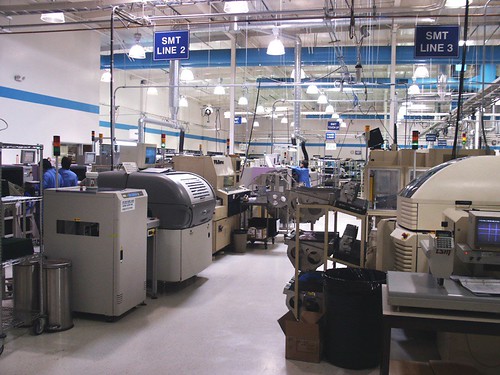
A recent article on TechRepublic shows how Toyota supplier, AW North Carolina (AWNC) spent $1.2m on new Cisco equipment, which has led to significant savings for them. Few charities will invest that amount in a new CRM system, but some of the approach which AWNC took provides us with very useful ideas for the benefits which charities may get from new CRM implementations, often regardless of size.
1) "Downtime at AWNC costs $272,000 an hour, so it's crucial to get systems
up and running as quickly as possible. Any downtime, particularly in
shipping, is incredibly detrimental."
Okay, so it's unlikely that a CRM system being down for an hour at a charity would have quite such high costs! However, downtime due to a poor or unsupported system or inadequate IT infrastructure is not always factored in to a charity's view on whether they need a new CRM/fundraising system.
So consider: what would it mean to your staff if they couldn't access their database for an hour? Probably, it wouldn't be terrible for most fundraisers/staff, they could cope for that time, although Supporter Services would no doubt find it awkward for managing in-coming phone calls. But what about half a day? Now staff will be getting more anxious, a backlog of income processing might build up, supporter services are finding it more difficult and major donor fundraisers can't see their contacts' details. What about a full day? Much harder now: thank you letters might be delayed, management for a forthcoming event becomes much harder, and what would happen if that day happened to be the day when you were due to do your Direct Debit claim?
So it's not just the cost of a new CRM system - all this needs to be considered when looking at investment.
2) "As a result of the new technology, AWNC avoided maintenance costs on the old equipment of $1 million in the first nine months the system was in place"
Again, unlikely for most charities that they will save $1m in nine months due to replacing a CRM/fundraising system, but I have come across several NFPs who are paying existing suppliers ridiculously high annual maintenance costs for what they are getting, even without upgrades and developments. And/or they have to have specialist, higher paid staff for their current, old system because there are so few people who can support it. So even if it is going to cost you £x to invest in a new CRM system, what are your savings going to be in the first 12 months? (In the next 5 years?) Forget "possible extra income" benefits for a moment, these figures are hard cost savings.
3) "About 40% of the savings will be ongoing and realized annually."
We
forget this sometimes, that savings (and benefits of course) will not
just be the first year, but over the following five to seven years. So
in addition to point (2) above on immediate savings, what other costs
will be lowered or made more efficient by a new system? Lower staff costs?
Or maybe, the same staff costs but those staff being far more
efficient, productive and proactive? Time-savings from quicker
processes? Time-savings (and better productivity) from simpler, quicker
development tools? Development you can do in-house now rather than
having to always go to an expensive software supplier?
4) "It was very clear... that the infrastructure was not keeping current with where the world had gone."
We're
all aware that digital is where fundraising is going. Yes, there will
still be plenty of 'traditional' or offline income coming in for some
years to come, but that appears to be declining, and GDPR/DP issues could be
forcing our hand in terms of reducing direct marketing. There is a point
when you do need to review how and whether your existing
CRM/fundraising system can support you and provide additional benefits
with your future fundraising plans because of changes in the outside
world.
5) "It's common in a manufacturing plant to avoid buying new equipment in a misguided attempt to save money, with IT teams not realizing that the operational costs to troubleshoot problems and the associated downtime in a factory environment can result in even higher costs."
I love this! How many of you have suffered from this problem with your antiquated or unsupported fundraising databases?! (And it's kind of reassuring that commercial organisations have this problem too!)
6) "The big push for last year was solidifying the environment, and this year is all about pushing out into the applications and into the manufacturing space to impact yield inventory."
This is just a small point to show that any new CRM implementation does not have to be rolled out to everyone or to manage all potential benefits immediately. Plan for future expansions in the subsequent years after your immediate go-live - you don't need to, and shouldn't try to do everything on day one.
My views on the database market for charities and NFPs: packages, CRM and bespoke developments. In particular, but not limited to, fundraising and membership.
Showing posts with label Procurement. Show all posts
Monday, April 24, 2017
Monday, December 19, 2016
Supplier Catchphrase Bingo!
On the eleventh day of Christmas, my truelove gave to me... Eleven Things Which Suppliers Say at Demos Which You Can Use to Play Supplier Catchphrase Bingo!
So this is mainly for fun but with a serious(ish) message. The next time you have a software demonstration from a supplier or set of suppliers, listen to their spiels and see how many of the following phrases they say which you can tick-off in each presentation...
Of course, some suppliers may say some of the above things and genuinely mean them. Some companies of course implement CRM systems using an Agile project methodology and may well do it well (I'm just sceptical of what exactly they mean by that or if it is just a buzzword they are using); some will truly believe that Cloud is best (for them at least); and some may well have sorted out another supplier's "problems" at another charity - but by the time you've met a few, each one of them will be claiming they have sorted out another's problems...
My point here is not to ridicule suppliers, but to emphasise that they are, understandably, selling to you. You need to ask questions, dig down into specifics, request examples, ask them to show you specific elements of their software, talk to their implementation and support staff, have second meetings and so on and so on.
And always take with a pinch of salt any company that says their software is completely future-proofed.
So this is mainly for fun but with a serious(ish) message. The next time you have a software demonstration from a supplier or set of suppliers, listen to their spiels and see how many of the following phrases they say which you can tick-off in each presentation...
| We offer the best support in the sector | Our system provides a 360 degree view | We want to be a partner with you |
| This is a Game Changer | You must be in the Cloud | Our system is completely Future-Proofed |
| We’re specialists in sorting out other suppliers' problems | You don’t need any documentation | (We do) Agile... |
| You should never buy… (e.g.) a CRM Platform/proprietary fundraising software… | ||
| X isn’t difficult (e.g. data migration, integration, reconciliation with your finance system, security) | ||
Of course, some suppliers may say some of the above things and genuinely mean them. Some companies of course implement CRM systems using an Agile project methodology and may well do it well (I'm just sceptical of what exactly they mean by that or if it is just a buzzword they are using); some will truly believe that Cloud is best (for them at least); and some may well have sorted out another supplier's "problems" at another charity - but by the time you've met a few, each one of them will be claiming they have sorted out another's problems...
My point here is not to ridicule suppliers, but to emphasise that they are, understandably, selling to you. You need to ask questions, dig down into specifics, request examples, ask them to show you specific elements of their software, talk to their implementation and support staff, have second meetings and so on and so on.
And always take with a pinch of salt any company that says their software is completely future-proofed.
Tuesday, January 20, 2015
My New Book: 102 Tips on How to Buy Fundraising Databases and CRM Systems

It is written for people whose day job is not the procurement of new databases - and you do not have to be technical to understand it. It is for fundraising managers, fundraisers, database managers, charity IT staff, those working in supporter services and indeed for anyone who has been given the sometimes daunting task of buying a new fundraising database or CRM system.
It covers the basics of procurement (strategic advice, costs, software demos, project management) but also delves into more detail on supplier management, considerations about database development, the whole tender process and a chapter dedicated to the 'generic' CRM systems (Microsoft CRM, Salesforce et al) which are challenging the more traditional fundraising database packages.
It is available as a paperback on Amazon, on Kindle and as a simple, instantly downloadable PDF document. It costs £20 (+ VAT for UK/EC residents).
I hope it inspires, assists and enhances your buying process, whether you are already comfortable with a procurement exercise or even if you have never managed one before. Think of it as your own consultant seated by your side as you go along – only at a fraction of the cost! I hope you find it useful.
Where to Buy It...
The book costs £20 (+ VAT for UK/EC residents), and is available from:
PDF document - instant download from my website |
||
Monday, January 19, 2015
Differentiating Suppliers of the Same Software Platform
An interesting challenge is arising on CRM platforms. With more and more companies producing 'templates' for fundraising and membership solutions on the same platforms (mostly Dynamics and Salesforce), I am finding that I see quite similar looking software from different suppliers. Which leads me to ask myself: if the platforms are that good and are right for my clients, and the software is starting to blur into the same sort of solution, then how do I distinguish between the different offerings?
First, it's about the supplier
What this shows straight away is the importance and significance of the supplier themselves. i.e. their approach to your project, their empathy with your organisation and staff; the people they employ; their sector knowledge. The added value they can bring to the project and to your organisation. All the usual sort of stuff I discuss frequently on my blog, but with a different level of emphasis because of such a need for comparisons and differentiators.
And that to me is still the most important thing.
But it is the software too
There is more you can also do to look at the software more deeply. Even if it looks similar (which it probably will because it will be on the same platform) it will of course be different when you look closer, especially in the areas of fundraising or membership. Some of the specifics you could consider include:
- How are the companies actually presenting the core data which you want to see? Is it truly intuitive? Is there flexibility in its presentation? Have they understood how fundraisers want to see and use such data?
- Look especially more deeply at the most critical parts of the software. For most charities who are doing fundraising this will be the income management. i.e. If a supplier is offering you a solution with some sort of template to manage your cash donations and regular donations, then how have they structured that? Have they used the platform's standard entities? Have they used custom entities? How have they created a system where you can record a pledge and its instalments? How have they created a system which enables you to create a direct debit mandate and then record all the future payments against that? And do they really understand regular giving itself? And how about reporting of this area - that takes some thinking about. This will start to show-up differences and suppliers' comprehension of this crucial area.
- What about batch entry of income? What about the data entry of more complicated aspects of some fundraising data - e.g. in memory relationships, corporates and their contacts?
- How have they actually coded the system to process direct debits? Can they manage high volumes - not just your current levels but if you increase them too?
- Do they understand Gift Aid and how have they linked their system with HMRC's Charities Online?
- How have they optimised the more common CRM elements for charities' needs? e.g. opportunities, leads. Have they shown how you major donors and HNWI fundraisers could get the most out of such systems?
Finally, you'll notice I haven't mentioned cost. So, yes, cost does of course distinguish and separate suppliers, but it's never as simple as saying that the cheaper solution is the one to go for. There is so much more to cost than that! Have a look at my blogs on cost factors and indeed, everything else about procurement.
Monday, December 15, 2014
How To Tell If a Supplier's Lead Consultant is Right For You
I've written many times how I believe that one of the most important things for any database implementation is the database supplier itself. And within the supplier relationship, one of the most important relationships will be that between your supplier's 'lead consultant' and your staff. So you need to make sure that such a relationship is right for you. And one way to do that is to hold 'mock workshops' during the procurement process.
In almost all fundraising database and CRM system implementations you are going to have some sort of initial 'discovery phase'. This might be as simple as two or three days with the supplier where they take you through the options, discuss your needs and configure their system with you. Right through to several months of intense work with many workshops, software prototyping sessions, business analysis work and more.
Personally, I think that this is one of the most important parts of your implementation. Get it right and the subsequent system development will have every chance of going well; get it wrong and you're starting off down the wrong path from the word go. Not good.
So it therefore leads on naturally that whoever the supplier allocates to work with you as their 'lead consultant' has to be someone who you trust and who is right for you. That job title may go under various guises but essentially it is the person from the supplier who will lead you through the workshops, who will work with you in defining how the systems should be for you, will do a variant of business analysis of some sort, maybe even some project management, and will as a result work very closely with your staff.
So to find out if a supplier's lead consultant is good and is going to work well with your staff, one thing you can do is hold a 'mock workshop' during your database procurement. By this I mean that you should arrange a session whereby a supplier's lead consultant visits your office and leads a workshop with some of your staff in order that you can assess how that goes. This should be done in the same way that the supplier would do if this was a workshop during your actual implementation. The importance of this is not so much the subject of such a workshop, but more about the approach which the consultant takes, their connection with your staff, the confidence which they do (or don't) bring to your team, and so on. I have done this a few times and it has always been useful.
I wouldn't suggest doing it with all your potential suppliers and you need to wait until you are some way into the procurement process so that any short-listed suppliers can say who you would be working with if they did win your contract. As such, I would normally do this with, say, just the last two short-listed suppliers when we are getting close to making a decision. It is therefore one of the things we can bring into the final decision process.
And if you want to take this a step further, then don’t just ask for a mock workshop, but ask the supplier and lead consultant to then go back to their office for a few days/weeks and then return to show you what they would do with the knowledge they have gained from you. E.g. ask them to configure an aspect of their software for you based on the workshop subject, and/or ask them to show what documents they might create from such work. Don't take advantage of a supplier's time if you do do this - i.e. don't expect them to spend many man days customising a complicated part of your system - it should be just enough so that it shows they have put in some effort.
Yes this is more time and work for you and your staff, and of course for the supplier(s) too, but it is definitely time well spent. It's such a critical part of your project that anything you can do like this to try to improve the chance of success can only help.
Monday, November 24, 2014
So: what makes us think it will be different this time?
It's a sad fact that so many fundraising/CRM database implementations fail or are not nearly as successful as we hoped. And although there are various potential reasons for this which are central to many of my blog posts, we can also look at this problem in another way - if you have experienced a failed project at your organisation in the past, then ask yourself this: If we are about to launch a brand new CRM procurement and implementation project, what makes us think it will be different this time?
If this strikes a chord with you and you want to ask this question internally at your organisation, then here are some questions you could consider and try to address. Hopefully, they will (at least start to) give you the ability to decide whether or not you have learned from previous projects and tell you a lot about yourselves before you embark on another big project.
- What were the reasons for failure on the last project? (Did we even hold a Lessons Learned meeting?)
- Did we even define success criteria? Were they measurable, achievable, realistic?
- Do we have a proper business case? Has it been ratified by more than just a couple of people?
- Are we asking the same people to run and be involved with the new project? If so, why do we feel they can now do it? Do they have that much better experience now? Do they know all the pit-falls they could encounter this time? Have we sent them on any sort of training or learning programme since?
- Have we got new people involved? Are they any better?! Do we need more people?
- Are our senior managers fully engaged?
- Do we understand what our risk is? Do we know how to mitigate or accept risk?
- How do we really know we have got an appropriate budget this time around?
- How do we really know our planned timescale is possible or realistic? Could it even be too slack?
- Do we have a project manager? What sort of experience do they have?
- Do we have project governance? Do we understand project governance?
- Even if we do feel we have learned lessons, how will we monitor the next project to make sure it stays a success?
- Was our actual data an issue? Do we have new faith in that now?
- How can we be sure that the next salesperson we meet doesn't spin us the same lines as last time?
Maybe I can use a famous Albert Einstein quote to sum-up: "The thinking it took to get us into this mess is not the same thinking that is going to get us out of it."
Monday, September 22, 2014
During a procurement process, make sure you meet staff you will be working with if you select that supplier
Many people probably know the importance of this tip, but if not then you should do: when you are running a procurement process and you are meeting potential suppliers for your new CRM or fundraising system, make sure you meet the actual people from each supplier who will be working on your project. You need to be sure they are appropriate for your organisation and your project and you need to be sure that a supplier will not roll out their 'A team' during a sales presentation and then bring an entirely new team if they win the contract.
Getting the right people from the right supplier is a critical part of any procurement and subsequent implementation. You can meet the most charming and knowledgeable salesperson and pre-sales staff and then find that the implementation team know next to nothing and have no empathy with you. (Conversely, even if you don't like a salesperson, if their project team are good people then you might well overlook the dodgy salesman!)
So ask the supplier about who you could be working with, their skills and backgrounds, what other charity/fundraising/CRM projects have they worked on, why are they good, how are they trained, what is their knowledge of fundraising (or membership or service delivery…) Get their cv's. And meet them.
My one caveat to all this is that you need to do all this at the right moment during your procurement process. There is less point in doing it when you are still half a year ahead of a project kick-off - who knows what will happen between now and then; and it may be less fair to ask a company who is still on a short-list of six or seven possible suppliers for your project to name the definite people you will be working with. A supplier can't necessarily make such commitments at that time. That said, even in those scenarios you can (should) ask to meet the staff you might be working with and even that will give you an idea of the sort of person which the supplier employs - and then once you are down to your final few companies then you can start to be more firm with the suppliers and ask them for actual names and meet them.
Monday, September 15, 2014
When buying CRM systems, do consider multiple business partners for each platform
One of the great benefits of the generic CRM systems (Salesforce, Dynamics, CiviCRM etc) is that there are many business partners for all of them (aka resellers) who could help you implement such systems. But if you are considering such solutions during your procurement and you just have one supplier per platform pitch for your project (e.g. just one Salesforce reseller, one Dynamics reseller etc) then you will be missing out on all sort of possibilities.
For a start, each partner/company of course has their own approach to implementing such software for charities. And if you find that their approach, ethos or people are just not right for your organisation then you could be automatically eliminating 'their' platform but based more on the company than the software/solution. And that might be reducing your options in the wrong way. (Of course, it is quite understandable that you don't select a company because they aren't right for you, but I would suggest you should give yourself scope to understand alternatives apart from said company for said platform).
Then there is their knowledge, skills, background, experience and so on. And their beliefs and ideas as to how best to do such implementations. If you don't look at multiple suppliers for each CRM system then you will only see that system through the eyes of one company, and I think that presents quite a risk for you in not necessarily seeing the best of it - or conversely, understanding its weaknesses.
What if you have a business critical requirement such as processing direct debits or managing online event applications and you hear from just the one supplier that this can't be done on 'their' platform - then should that mean immediately that you can't use that system at all? Or as bad, what if you only select one supplier and they tell you they can easily do that function and then two-thirds down the line it turns out that they can't, then have you wasted an opportunity in understanding that platform better?
Even if you only review two such suppliers for each platform then you will learn so much more from each one, and thereafter even if there is one who you definitely don't want then it is still quite feasible you will learn something from them which you can use with the other business partner. (And even if you don't, then even that will tell you something as to how good and how much more appropriate your chosen partner is!) And remember, as per my recent blog post, you can also consider Pre-Qualifying meetings before short-listing to a final one or two suppliers per system, thus enabling the potential for even more comparisons.
Monday, September 01, 2014
Try Pre-Tender Qualifying Meetings with Suppliers
One long standing question with every CRM procurement process is, Who should we invite to tender for our project? You might well know some companies who you want to invite, but there may well be others you have heard about, researched or you are interested enough in them that you want to know more - but (probably) the last thing you want to do is to invite ten or twelve different suppliers to do long software presentations and answer even a medium length ITT document. Apart from anything, if you tell a supplier that they are one of twelve you are inviting to tender, then they aren't going to be nearly as driven to commit time and effort to your project as opposed to when they are one of four or five.
One option is therefore to hold 'pre-tender qualifying' meetings. (It's a bit similar to OJEU PQQs). For this, you will still need to meet at least those suppliers who you are uncertain about (and maybe even all possible suppliers - c.f. below) but only for a shorter time and with a slightly different brief. Bearing in mind the importance of the supplier themselves, their knowledge, skills, client-base, project approach and so on, you will gain an awful lot in these meetings just by discussing these sort of things with the suppliers even for just a couple of hours each. That's enough to give you a better understanding of them and for them to feel they are being listened to, but they don't have to spend many hours preparing for a detailed presentation or answering a long ITT - and you don't have to sit/wade through such presentations/documents.
And for anyone who doesn't think that this is long enough to assess a supplier's capabilities - well, I really can say that those who don't cut the mustard are fairly evident. In fact, I'm quite surprised at how poor (sadly) some prospective suppliers can be. You'll know them when you see them. And it's not just me who has found that out - the clients I work with are just as savvy at picking up on the poorer candidates. Okay, every now and then we might see a company who initially impress us and then we later find out they aren't quite all they were quite cracked up to be, but that's comparatively rare and that is part of the procurement process.
I do sometimes also ask suppliers to give me a brief demo of their software in such meetings, but I do so mostly where I already have some idea of that software - e.g. especially with the generic CRM systems. It isn't fair to a supplier to ask them to give you a thorough demo for the first time in just 30-45 minutes, it's almost not worth it. But if you know the basics of, say, Salesforce or Dynamics, and you instead want to see how a supplier has configured it for another charity or type of fundraising, then that can help.
I also always ask suppliers to bring at least one of their project team who our charity could be working with to these meetings. So it's not just the salesperson you are meeting, but, also say, a project manager, implementation consultant, technical architect, support manager etc. The suppliers who value your business will do so. Those who do only bring a salesperson will tell you something about the company too.
After all these meetings, you can then short-list to, say, between three and five companies (or whatever number you are comfortable with), in order to get right down to detail.
I find this process especially useful these days with the sheer number of possible "CRM" suppliers (i.e. the Salesforce, Dynamics, CiviCRM partners etc) where, even though they are using the same platform, there can still be distinct differences in a supplier's approach, knowledge or how they use the software. But it is equally useful with the fundraising package vendors too.
In terms of fairness, if I am holding such meetings, I would do this not just with those suppliers who I may or may not ultimately short-list, but even with those who I am pretty sure I will short-list anyway. That means you can judge everyone equally, give everyone the same possibility to impress (or otherwise) and you are bound to learn something at this stage about everyone, whoever they are.
Monday, April 28, 2014
The 3 top reasons why you should still consider traditional fundraising software
So much is written now - by myself included! - about the (now not so) new CRM systems (I.e. MS CRM Dynamics, Salesforce et al) that you could be forgiven for forgetting that there are still other options. But the good ol' traditional fundraising database package is of course still going strong (e.g. Raiser's Edge, thankQ, CareNG, Advantage Fundraiser etc), and it is still selling well (out-selling CRM?) and there are clear benefits for at least considering it if you are looking at a new fundraising database solution.
These are my top three reasons why you should still consider the fundraising database package:
- The built-in fundraising functionality: this has to be number one. These guys have been selling fundraising databases before Salesforce was a twinkle in Marc Benioff's eye. And as such they have rich and comprehensive built-in functionality for fundraising. It's why they were created in the first place. And even the more thorough templates/apps which are now available for Dynamics and Salesforce are hard-pressed to match all the fundraising functions which the fundraising packages can offer - and some don't even claim to be more than a starting point. Some of them are getting closer of course...
- The suppliers themselves: This is almost as critical as the functionality - in fact, sometimes I would put it above the functionality for a reason as to why you should consider fundraising packages. Because the suppliers have years and years of knowledge of working with charities; they have staff who will have hundreds, even thousands of hours of experience which they have gleaned from the NFPs they have worked with; they have the heritage of working with the sector; and many have hundreds, even thousands of existing charity customers who already use the software, have provided feedback (good and bad) and who, believe it or not, may actually even like the software!
- Reduced risk of the implementation itself: Some of the more critical aspects of a fundraising database implementation are aspects such as direct debits, marketing selection processes, finance/donation structure, gift aid and so on, and these are the areas which the packages already have ticked and, as importantly, have implemented many times in many different environments. Even the better CRM systems still have limited exposure to such areas and are still learning. This does reduce risk. Equally, the wider functionality already available means you have a structure to the system and the implementation, you will be able to run your processes in proven ways and you won't just forget some functionality. Plus, the suppliers have done it all before many times and it's even quite feasible that some of your staff will even know the new system from other places they have worked.
Thursday, February 06, 2014
Which database is best for a Solo Fundraiser?

Following on from my previous post about What is the best database for a small distributed charity or a solo fundraiser? this post considers what the difference might be for a charity who only has a solo fundraiser. However, my previous post addresses the fundamentals of any such decision even for solo fundraisers, so if you haven't read that yet then do so first.
The main additional points for a Solo Fundraiser to consider are as follows:
- Are you working for a small charity who does have an office and, if so, then do you already have an on-premise server? If so, then you can look wider for any system which might meet your needs as it doesn't have to be hosted/SAAS. You might still of course want one of the hosted/SAAS systems already mentioned in my previous post, but additional examples of such systems you could consider compared to the ones from my previous post are Donor Strategy, KISS Software and Harlequin Software.
- Even though you are a solo fundraiser, is it likely that the charity could grow in future? If so, then most databases should still be sufficient for such instances, but just don't forget or assume that.
- Even though you are a solo fundraiser, do you actually work for a larger organisation with more complex requirements? In which case, it might be that the very simplest fundraising database might not be applicable to your needs. Hard to quantify, but don't just assume therefore that a low-cost option is best for you. For example, I do know of some charities who have even bought The Raiser's Edge for a solo fundraiser, but in this sort of instance, that is more when they have good in-house IT support, when a fundraiser knows that sort of system and often when they are planning to grow later. (NB Clearly, other databases similar to The Raiser's Edge have also been installed for solo fundraisers - I use The Raiser's Edge as an example because of its wide awareness and to emphasise the point that it does need more support and consideration when implementing it).
- As no-one else is going to be using the database initially (although I realise some places might have the odd, additional manager also viewing it at times), you really do need a system which does not require complicated management. The difference here to the 'small distributed charity' is that that charity might very well have a few people using it and might be able to justify better the input required to manage it for the whole organisation.
Monday, February 03, 2014
What is the best CRM Database for a Small distributed charity or a solo fundraiser?
A couple of questions I am regularly asked are: "I am looking for a CRM/fundraising package for a small charity with no central office. So, no server and we probably need something to work across Windows and Mac." And it must be simple to use... Similarly, "What is the best database for a solo fundraiser?" So, I thought I should try to answer these questions here. I will address the 'small distributed charity' first as much of that applies to solo fundraisers too, and then add a shorter, second post with additional details on databases for solo fundraisers.
First: Get your main IT infrastructure sorted out
This is important. Especially if you don't have a central office, and the route you take may partially influence your decisions on which is the best fundraising/CRM system for you. So, first of all, if you haven't done so already, make sure your email system, file access, website etc are all part of a solid strategic approach.
Second: Remember, it's still important to know your fundamental database requirements
This is the same for any database procurement and just because you are a smaller organisation doesn't mean you should completely ignore it. So do document what you want the system to do, even if it's just in a brief Word document. That will help you focus on what is most important to you and you can then weigh-up the system options later. And remember, whatever database you buy, the data you put in it, the business processes and training you put behind it, and the fundraising strategy it is supporting are all more important than the software itself. You can have the best database in the world but it won't help if your data is rubbish, you don't adapt your processes and so on.
You also need to bear in mind just how much time and effort you can or want to allocate to managing your CRM/fundraising database. Remember that all systems will require some initial work, regardless of what the salespeople say! You will have to consider the configuration, maybe data migration, how and where you are going to store your data, how external data files will be loaded, how training will be done, how you will maintain look-up tables to ensure good data consistency and so on. And even though you are a small charity, there could still be a number of people who might well want to access and use your database, especially if it is not just for fundraising. In which case do remember the need to have someone who is data/database savvy so that they can manage these issues.
All that said, I do realise that for many small organisations, your requirements will be similar and comparatively fundamental, so I will use that assumption in the rest of this post. Plus, I am restricting examples of systems to those which should be within the budget of a small charity.
Oh, And it Must Be Simple to Use...
This is possibly one of the most frequently used statements which small (and large!) charities use. So it is important to realise that CRM and fundraising databases are not as simple conceptually as Excel, Outlook etc. They will take time to learn, they will need some looking after and the likelihood is it will cost money to do all that. Sorry. There is no easy answer to that. Software is getting easier to use and more intuitive but at the end of the day some of that is still down to individual preferences and interpretation. Just don't under-estimate the work involved in getting going if you haven't used a CRM system before.
Two technological approaches: Hosting and SAAS
Fundamentally, you have 2 technology approaches which may influence which databases you consider, and which technology is right for you will partially depend on your IT infrastructure. 1
SAAS stands for Software-as-a-Service, where a supplier provides a database which you can access as simply as gmail etc, and from any browser without the need for any additional software. Most such solutions are only offered this way (with a few exceptions); i.e. not with an alternative "on premise" option.
Hosting is similar but one-step removed, where your database will be "hosted" on a remote server in a secure data centre somewhere (i.e. you still won't need a server in your own office to make this work). This is usually done for software which has not been written specifically to run directly through a browser and thus it still needs to be stored on a specific server somewhere. Thus for hosting, a supplier will most likely host the database on the supplier's own server and you access it remotely from your office/home. (Additionally, most such suppliers will also offer clients the option of letting you install their database on your charity's own server).
In theory, you could take any fundraising database and host it on your own server anywhere - but to do that, I would recommend that you need to have taken the IT infrastructure route which already supports that. i.e. you are already using a company to do this for some/all of your other files/software applications.
Examples
Examples of SAAS databases are Salesforce, Microsoft CRM Dynamics, Workbooks and companies offering 'templated' versions of these. Plus, fundraising systems such as eTapestry or DonorPerfect.
With hosting, you have a wider option of solutions. As I mentioned, you could look at almost any database, but some companies already offer Hosted solutions as part of their portfolio, mostly through third-party partners; e.g. CiviCRM, Advantage NFP, thankQ. (Remember these are products more applicable to small charities - there are many more options for larger organisations).
And if as a small charity you have more severe budgetary issues, then the following posts I have written before might also help you: What should you do if you really have zero budget for a new CRM or Fundraising database? and Why Free Software Doesn’t Mean Zero Cost.
1. More technology-savvy readers will no doubt realise I have greatly simplified these descriptions, so please forgive any gross over-simplifications! If you feel I have really misrepresented anything then please let me know by email or in the comments below - thanks.
Sunday, December 01, 2013
Is there any place for the Long ITT anymore?
The short answer
No.
The only slightly less short answer
No, except when you have to, such as OJEU or similar requirements.
The Full Answer
Okay, let's address this question properly. First of all, what do I mean by a "Long Tick-box ITT"? Well, pretty much as it sounds: it's when you devise hundreds and hundreds of questions, mostly about functionality, and ask suppliers to respond to your Invitation to Tender (ITT) document by asking them to tick a box which says if they can meet that requirement. Often, this will be a MoSCoW method (or similar): Must have, Should have, Could Have, Won't. (Never underestimate how much IT loves its acronyms and pseudo-acronyms). And then sometimes one asks if they can do it 'Out of the box' or 'with customisation' or 'not at all' - or similar. Thus, the suppliers tick these boxes, you add-up their scores, sometimes weight the questions with more/less importance and hey presto, we have a winner. Or at least a short-list which you can then invite in for a demo.
But it's really not as simple as that. In the first place, suppliers have been known (shock horror) to stretch the truth when ticking boxes and interpret a question so they can say yes they can do it when maybe they can't really... And in some ways, that's understandable as writing such questions so they are non-ambiguous can be difficult.
Plus, completely understandably these days, 'generic' CRM suppliers can probably say with (almost?!) complete honesty that they can do all almost all of a CRM ITT's requirements because their systems have been designed for exactly that flexibility. But that still doesn't mean they are necessarily right for you to buy.
And it doesn't tell you anything about how they would do it, or if they do it well, or if they understand the question and so on. Okay, so some of that can be addressed at a software demonstration but by that point you may have knocked out a good option (supplier) without knowing it, or you might find a supplier is actually completely inappropriate for your organisation or requirements. It's just a non-efficient method.
In fact, the time it takes for this whole process is a looooong time. A long time for you to create the initial document, a long time for the supplier to answer and a long time for you and your colleagues to read all the responses and mark them.
Couldn't there be a better way of using your time? In my opinion, yes. Personally, when I help charities with a procurement, I prefer more 'open' tender documents (aka RFP - Request for Proposal), asking for more expansive responses, possibly with the inclusion of process diagrams and a more interactive approach with the suppliers all round.
And I'm not completely against including a few lists here or there in the RFP of specific requirements which you must have - especially where they are especially important. But I don't ask suppliers to tick each bullet point.
Clearly, there is a lot more to the whole procurement process than just the above - but super-long ITTs? No, not for me. I don't think they help you select the best supplier for you. Which is ultimately what you want.
No.
The only slightly less short answer
No, except when you have to, such as OJEU or similar requirements.
The Full Answer
Okay, let's address this question properly. First of all, what do I mean by a "Long Tick-box ITT"? Well, pretty much as it sounds: it's when you devise hundreds and hundreds of questions, mostly about functionality, and ask suppliers to respond to your Invitation to Tender (ITT) document by asking them to tick a box which says if they can meet that requirement. Often, this will be a MoSCoW method (or similar): Must have, Should have, Could Have, Won't. (Never underestimate how much IT loves its acronyms and pseudo-acronyms). And then sometimes one asks if they can do it 'Out of the box' or 'with customisation' or 'not at all' - or similar. Thus, the suppliers tick these boxes, you add-up their scores, sometimes weight the questions with more/less importance and hey presto, we have a winner. Or at least a short-list which you can then invite in for a demo.
But it's really not as simple as that. In the first place, suppliers have been known (shock horror) to stretch the truth when ticking boxes and interpret a question so they can say yes they can do it when maybe they can't really... And in some ways, that's understandable as writing such questions so they are non-ambiguous can be difficult.
Plus, completely understandably these days, 'generic' CRM suppliers can probably say with (almost?!) complete honesty that they can do all almost all of a CRM ITT's requirements because their systems have been designed for exactly that flexibility. But that still doesn't mean they are necessarily right for you to buy.
And it doesn't tell you anything about how they would do it, or if they do it well, or if they understand the question and so on. Okay, so some of that can be addressed at a software demonstration but by that point you may have knocked out a good option (supplier) without knowing it, or you might find a supplier is actually completely inappropriate for your organisation or requirements. It's just a non-efficient method.
In fact, the time it takes for this whole process is a looooong time. A long time for you to create the initial document, a long time for the supplier to answer and a long time for you and your colleagues to read all the responses and mark them.
Couldn't there be a better way of using your time? In my opinion, yes. Personally, when I help charities with a procurement, I prefer more 'open' tender documents (aka RFP - Request for Proposal), asking for more expansive responses, possibly with the inclusion of process diagrams and a more interactive approach with the suppliers all round.
And I'm not completely against including a few lists here or there in the RFP of specific requirements which you must have - especially where they are especially important. But I don't ask suppliers to tick each bullet point.
Clearly, there is a lot more to the whole procurement process than just the above - but super-long ITTs? No, not for me. I don't think they help you select the best supplier for you. Which is ultimately what you want.
Sunday, November 24, 2013
Should organisations choose a CRM platform before a supplier?
With the emergence of the generic CRM systems and the reduction in the number of viable proprietary fundraising databases, an interesting question is arising: should charities now be choosing a CRM platform before even looking at which specific supplier/partner they want?
It is a process which some companies in the commercial sector have already been practising for years. For some companies, they will decide first on whether Salesforce, Microsoft Dynamics, SugarCRM etc are the best fit for them, and only then will they search for a specific partner who can help them implement a new CRM system on that chosen platform.
For charities, however, at least until recently, because the options have primarily been about comparing different proprietary fundraising database suppliers (e.g. Blackbaud, thankQ, Redbourn, ACS etc), this has not been an approach we have taken. That said, there will of course have been some technological decisions: the system must be SQL Server, or it must be Oracle; it must be dot net or it must run on Linux etc. Or even, it should be open-source. And so on. So it's not a completely alien idea.
It's just that with the new CRM systems, the platform choice can be far more "business-oriented"; i.e. if we do decide that platform X is the right solution for us - and if that platform is one of the generic CRM systems - then we now have the choice of talking to numerous companies about how they would implement that, looking at whether we want a templated version or start out-of-the-box, develop in-house or with a partner, and so on.
But additionally, if as a charity you do want to be considering a platform first, you also need to consider the proprietary solution as one of those platforms - and (probably) not just one such solution but the concept as a whole. As I have discussed many times in my blogs, there is no simple right and wrong as to whether you should select a traditional fundraising database or a CRM solution. If you do select a proprietary solution then you will (almost certainly) implement it with that system's software author and that has its pros and cons. If you go with a CRM solution, then using a business partner of that software author (or even doing it in-house) also has its benefits and downsides.
Personally, at the moment, I think choosing a platform first is a difficult approach to take for all but a few, probably larger charities who already have a detailed, well thought through technology plan and IT strategy. Especially at an early stage in a procurement project when you are still trying to understand the differences, the benefits of all solutions, the impact on your organisation and so on. I think there would have to be clear reasons for you to only look at the traditional fundraising databases, or decide not to look at those at all. You might dismiss one option or one supplier etc as you progress your procurement, but I believe you need to understand what all options can offer before going solely down one route. So at the moment that will usually mean keeping them all in the hat until you are ready to shorten your choices to the final few.
It is a process which some companies in the commercial sector have already been practising for years. For some companies, they will decide first on whether Salesforce, Microsoft Dynamics, SugarCRM etc are the best fit for them, and only then will they search for a specific partner who can help them implement a new CRM system on that chosen platform.
For charities, however, at least until recently, because the options have primarily been about comparing different proprietary fundraising database suppliers (e.g. Blackbaud, thankQ, Redbourn, ACS etc), this has not been an approach we have taken. That said, there will of course have been some technological decisions: the system must be SQL Server, or it must be Oracle; it must be dot net or it must run on Linux etc. Or even, it should be open-source. And so on. So it's not a completely alien idea.
It's just that with the new CRM systems, the platform choice can be far more "business-oriented"; i.e. if we do decide that platform X is the right solution for us - and if that platform is one of the generic CRM systems - then we now have the choice of talking to numerous companies about how they would implement that, looking at whether we want a templated version or start out-of-the-box, develop in-house or with a partner, and so on.
But additionally, if as a charity you do want to be considering a platform first, you also need to consider the proprietary solution as one of those platforms - and (probably) not just one such solution but the concept as a whole. As I have discussed many times in my blogs, there is no simple right and wrong as to whether you should select a traditional fundraising database or a CRM solution. If you do select a proprietary solution then you will (almost certainly) implement it with that system's software author and that has its pros and cons. If you go with a CRM solution, then using a business partner of that software author (or even doing it in-house) also has its benefits and downsides.
Personally, at the moment, I think choosing a platform first is a difficult approach to take for all but a few, probably larger charities who already have a detailed, well thought through technology plan and IT strategy. Especially at an early stage in a procurement project when you are still trying to understand the differences, the benefits of all solutions, the impact on your organisation and so on. I think there would have to be clear reasons for you to only look at the traditional fundraising databases, or decide not to look at those at all. You might dismiss one option or one supplier etc as you progress your procurement, but I believe you need to understand what all options can offer before going solely down one route. So at the moment that will usually mean keeping them all in the hat until you are ready to shorten your choices to the final few.
Sunday, October 13, 2013
CRM Dynamics template market for membership solutions already refining itself
I did some
work recently for a membership organisation who wanted to buy a new database
and they decided that Microsoft Dynamics CRM was the right solution for them.
However, having decided that and having looked at one vendor of a Dynamics
membership solution, their trustees asked them to review if there were other
companies who could also provide a suitable membership system on Dynamics.
Which, when I looked, was an interesting experience.
Just before
I go on to what the outcome was, I should say that I think this sort of
situation may start to become more common in the charity and membership sector.
It may be that some organisations even choose a platform before even talking to
a reseller - a practise which is certainly done in the commercial sector - but
even if an organisation looks at 'traditional' package suppliers and CRM
providers and plumps for CRM, then it will become far more common for them to
be comparing at least 2 such business partners, or even more. And as long as we
do this ethically and openly then this is no bad thing.
What my
client wanted was a supplier who already had a membership "template"
built on Dynamics for a UK
organisation. They weren't a large or complex organisation so it made sense. And
so I talked to a number of suppliers who I knew had or were planning to have such
templates. And what I found was the number of options had shrunk considerably in the last 12 months.
For a
start, several companies who used to sell such templates don't now. And I got some interesting feedback from those companies as to why this is the case (NB I am paraphrasing here):
- We moved out of the sector - fair enough I suppose, although disappointing for the organisations who had already bought into them;
- We found that a template couldn't support everyone's needs - understandable from one angle but I'm not convinced that should matter so much if you have a good foundation and a solid approach. There is nothing wrong with starting with the basics and developing each installation differently and appropriately for each client;
- And even: Our solution wasn't as good as others on the market so we stopped selling it. Honest at least!
- There was also more than one who, tellingly, never got back to me when I tried to email or phone them…
Which means
the market has shrunk to about 1/3 of the options I knew of a year ago, and I
was left with only 3 suppliers who still sell UK membership "templates"
for Dynamics: Excitation, Pythagoras and Silverbear. Additionally, m-hance
offer a "modular" approach where they don't exactly have a template
but do have different, appropriate modules they could provide for a membership
solution; a perfectly sound approach too. Plus there were a couple of others
who are still developing theirs.
What does this mean to you?
It shows
that you need to take so much care when buying a new system such as this. Yes,
one of the benefits of Dynamics (and similar CRM systems) is that if you do
your initial implementation through company X, and then company X goes bust or
you fall out with them, then at least you still have your Dynamics solution and
you can go elsewhere for your support. But it’s not what you ideally want. Like
any similar procurement, you want to buy into a company who is not just
supplying you software but who is also going to be a good business partner for
years to come, who can bring new things and ideas to the table, who gets to
know how you work and who understands the membership sector. That's a real
benefit.
You should
also be aware of any Intellectual Property (IP) issues in such procurements. If
a supplier is claiming IP on any of its software deliverables to you then what
would that mean if you did want to move away from their support or if they did
decide to stop enhancing their specific offering any more?
Sunday, October 06, 2013
How Not to Buy Software? The Astonishing Stats Provided by Capterra
Software resource portal, Capterra, has recently published a report on the findings from a survey they ran which examined how organisations make decisions when buying software - and it makes interesting and sometimes scary reading. For example, "1/3 of software buyers don’t demo any solutions before they make a purchase" and "another 22% just choose the first software they look at!" And very interestingly, "the more demos and options that software buyers considered, the less confident they were in their selection." Hmm.
And this survey included nonprofit organisations in its statistics…
Who gets involved with purchases?
The report details the types of staff involved in the buying process:
Of course, what is harder to quantify is what "involved" means for a purchasing decision. If it means being kept in touch and maybe ratification then that is very different to attending demos and making a final decision.
What do people look for in software?
One of the most interesting sections of the report is a table showing "The Most Important Factors in Software Selection". It's very interesting (some might say encouraging?) to see "Low price" and "Vendor's market share" so low in the table, and despite all the cloud-hype, "platform" is still only #9 on the list. Both "vendor responsiveness" and "software reputation" come above that - which shows how important the supplier itself is to the buyers.
Perhaps unsurprisingly, "Features/functionality" is listed as the most important factor. It's hard to get away from that. This is of course one of the downsides of "lists" like this - yes, functionality is important, and, for example, I often drone on about how it doesn't matter if software is/isn't in the cloud if it can't operationally support a charity - but I always encourage charities to consider features as just a percentage of a decision making process. Equally (more?) important are all the other issues such as supplier support, ease of implementation and so on. So it's not quite as simple as saying that the #1 factor necessarily outweighs others.
What can we learn from all this for a UK charity looking to buy new fundraising or CRM software?
Can a survey taken across a variety of industry sectors in the US also apply to CRM software selection for UK non-profits? Well, 50% of the survey's respondents have less than 100 employees in their organisation and 64% less than 500, so that's not so far off. And the "important factors" list tallies with my experience of UK charities' processes - not that that makes it right unfortunately. (And if you look at Capterra's website, then the Fundraising & Membership Software lists include names such as Blackbaud, Donor Perfect and Wild Apricot, so these are not insignificant companies).
But there is another table in the report which nicely sums up what organisations need to understand more, consider more and where they can do with help - and that is the Most Difficult Parts of the Software Selection Process table, which lists 3 key issues:
There are many more fascinating and enlightening stats in the report, not all of them so relevant to all the work we do in the UK fundraising/CRM software market, but still a great read!
You can download the full report from Capterra's website.
And this survey included nonprofit organisations in its statistics…
Who gets involved with purchases?
The report details the types of staff involved in the buying process:
- CEO/Presidents were involved in 40% of the software purchases - and this level of person is most likely to be involved in software which includes "marketing" (read fundraising) and one of the sectors which they’re more likely to be involved in software purchases is the nonprofit sector…
- IT Personnel were involved in 55% of all software purchases. Although it does also say that one of the software solutions IT staff are most likely to be involved with is Database Management, which I hope means that more than 55% of database purchases involve IT staff to some extent…
Of course, what is harder to quantify is what "involved" means for a purchasing decision. If it means being kept in touch and maybe ratification then that is very different to attending demos and making a final decision.
What do people look for in software?
One of the most interesting sections of the report is a table showing "The Most Important Factors in Software Selection". It's very interesting (some might say encouraging?) to see "Low price" and "Vendor's market share" so low in the table, and despite all the cloud-hype, "platform" is still only #9 on the list. Both "vendor responsiveness" and "software reputation" come above that - which shows how important the supplier itself is to the buyers.
Perhaps unsurprisingly, "Features/functionality" is listed as the most important factor. It's hard to get away from that. This is of course one of the downsides of "lists" like this - yes, functionality is important, and, for example, I often drone on about how it doesn't matter if software is/isn't in the cloud if it can't operationally support a charity - but I always encourage charities to consider features as just a percentage of a decision making process. Equally (more?) important are all the other issues such as supplier support, ease of implementation and so on. So it's not quite as simple as saying that the #1 factor necessarily outweighs others.
What can we learn from all this for a UK charity looking to buy new fundraising or CRM software?
Can a survey taken across a variety of industry sectors in the US also apply to CRM software selection for UK non-profits? Well, 50% of the survey's respondents have less than 100 employees in their organisation and 64% less than 500, so that's not so far off. And the "important factors" list tallies with my experience of UK charities' processes - not that that makes it right unfortunately. (And if you look at Capterra's website, then the Fundraising & Membership Software lists include names such as Blackbaud, Donor Perfect and Wild Apricot, so these are not insignificant companies).
But there is another table in the report which nicely sums up what organisations need to understand more, consider more and where they can do with help - and that is the Most Difficult Parts of the Software Selection Process table, which lists 3 key issues:
- Getting a clear picture of how well each possible software option could meet specific needs;
- Being able to make comparisons between software companies/vendors;
- Absorbing and understanding the information available about different software solutions.
There are many more fascinating and enlightening stats in the report, not all of them so relevant to all the work we do in the UK fundraising/CRM software market, but still a great read!
You can download the full report from Capterra's website.
Monday, September 23, 2013
Why now may be the wrong time to be investing in Fundraising Software for larger charities
These are interesting times for large charities and their fundraising database needs. They are being stretched like never before in terms of delivering technological support to the fundraising teams and they are being asked to do things they didn't have to consider a few years ago - and being expected to deliver it.
But if that means that they - you - are considering replacing your existing fundraising database right now, then I would encourage you to think twice just at this moment.
Why? Well because the suppliers to this market are all in somewhat a state of flux. Take the 'traditional fundraising database' suppliers: Blackbaud are still selling The Raiser's Edge 7, which, although still provides solid functionality, is showing its age, and Blackbaud know they need to release some sort of replacement - or replacements - whether that is called RE8 or something else. But that's unlikely to happen quickly. Yes there is also Blackbaud CRM but that is probably still just for the largest users and still to really make in-roads into the UK market.
And two of their main competitors, thankQ and what was IRIS, have both relatively recently been acquired by other companies: thankQ by the Access Group, and IRIS by Advanced Computer Software (ACS). I think, in the long run, both acquisitions should be good news for their clients and prospective clients, but we are still in the early days of both takeovers, and they are still finding their feet in terms of business approach and in terms of their own next generation of software.
Which surely then means that the new (generic) CRM solutions should be the right thing to consider? Well maybe, but maybe not. They too are going through a few changes. Yes, they are growing their customer base (not quickly for fundraising applications, but steadily), but they both have their own challenges in terms of applying their technology and platforms to fundraising needs, and there is also the question of knowing which reseller or partner one should use if one does want to buy one of these systems.
Because there are a lot CRM partners out there. You could go for one of the big consulting firms, many of which have an arm specialising in, say, Salesforce and who have huge development skills and CRM backgrounds, but what is their experience of fundraising and working with charities? So think instead of a smaller, specialist partner, who knows, say, Dynamics and who also (says they) know fundraising. Could be good if you choose the right company but there are so many around and even those with some sort of track record in the sector still have minimal experience of implementing these CRM systems compared to the likes of Blackbaud, thankQ and ACS.
And we are all still learning about the CRM systems' true capabilities as of today - and what developments in CRM systems really means for us tomorrow as a large charity in terms of commitment, resources and budget.
So what do you do if you are a large, or even mid-size charity and you do need to replace your fundraising database now? Well, if you genuinely have a burning platform then you of course need to get moving. Or if there are other, genuine risks to the continued use of your existing system or you can positively show that your fundraising income is being hurt by using your current system (and I mean really show that - not just maybe, sort of just think that because it, say, can't "do social media"), then yes, again, you should start planning.
But if not, if you just think you might need to be moving soon, or you've heard that someone else has replaced their database with X or Y, then I would caution you to consider. I think that in another 12 to18 months, some of the above questions will be ironing themselves out. Blackbaud should hopefully be able to publicly give some timescales for their next steps, we will know more about the acquisitions of thankQ and ACS, and Salesforce and Dynamics should have more live sites up and running and actually doing their fundraising on their platforms.
Of course, in 12 to 18 months time, some other great unknown will raise its head and I'll be saying wait until… Nah, surely not.
Tuesday, November 20, 2012
Should We Be Buying Fundraising Software Anymore?
It is highly likely that on your fundraising database, you will have donors or prospects who also have at least one other "type" of connection with your organisation. e.g. they may have bought products of some sort from you, they could be a ticket buyer, they might be a benefactor, a trustee, a volunteer, a subscriber/user of your website and so on. In which case, you may also hold their details on another database as well.
So if that's the case, then should we really be buying fundraising software anymore or should we be buying an organisation-wide system which can manage all this information?
Because the problems with having "isolated" fundraising databases include the following:
- They only store fundraising-related information about your donors/prospects and so you don't know about their wider engagement with your charity. In which case you don't have the full picture which means you might not be getting the most out of them - or helping them as best they want to be helped - or you might be communicating with them inappropriately.
- You might be writing to or contacting them at the same time as someone else in your organisation is also doing so - you can't manage an organisation-wide communication strategy or central contact management if you don’t know and can't control what other teams in your charity are doing.
- Having isolated systems (fundraising and other) engenders the "But it's my data…" paradox and problem. (Why a "paradox"? Read my previous blog post on what to say when someone says "It's my data"...)
- It is harder to do organisation-wide data analysis and marketing.
- And if you do want to "integrate" systems - make different systems "talk to each other" - then sadly that really isn't as easy or as cheap as you might hope or be lead to believe. Even integrating two databases is tough, let alone multiple systems.
On the other hand...
But if it is that simple, that obvious, then why is there still such a market for fundraising software and why don't all charities start to use a single, centralised database. Unfortunately, it isn't that simple.
- Specialist functionality: Fundraising needs specialist functionality in their database, from income processing, Gift Aid and managing direct debits, through to relationship management and prospect research. And other areas of your charity will need specialist functionality in their databases too: trading, websites, management of your services/service delivery and so on. And one, central, large database system may not be able to manage all that - or if it can, then can it do so with the same high levels of functionality that 'best of breed' systems can do?
- Data/database/organisation/change management. Having one, large database makes data management and change management a lot more difficult, involved and time-consuming. If you only have fundraisers to think about then any change or new data item only needs to be considered for them. But if you have more teams and users, then it will be far more work when considering and then implementing any such changes. Similarly: where would the database management reside for a charity-wide system? It probably isn't appropriate for fundraising to manage such a broad database and, often, IT aren't really the best people to do this sort of thing. You could have a dedicated "CRM" department but that's probably only cost-effective and practical in larger charities.
- Budgets/Organisation policies. Many charities have budgets specifically for each particular department so if you want to buy an organisation-wide system then that needs to be addressed.
- It's hard work! Organisation-wide systems take a lot of work, time, effort, resources, discussion, buy-in and money. And often present a riskier proposition.
- They aren't always appropriate. For some charities, it might be appropriate to completely separate the departments and functions and thus the databases. I think this is getting less common but it could be the case. Of course, even if it is right for one organisation, that doesn't necessarily make it right for another. Organisation size can play a part - smaller charities might actually find it easier to create a single, central database than larger NFPs.
But still - will we buying Fundraising Software? Should we...?
Having said all that, none of the above are necessarily reasons not to consider an organisation-wide database, they just need to be understood and planned for. And if it is the right route for your organisation and you can plan for and implement it successfully then it could well offer you significant benefits.
It's also true that some of the 'traditional' fundraising database suppliers are getting smarter and are offering systems which can manage more (much more in some cases) than just fundraising functionality. That may well be an option for some charities.
But in the meantime, whilst we are still working around some of the issues listed above, we will still be buying fundraising software at least for now.
Friday, November 09, 2012
Keeping Changes of Database Supplier in Perspective
If you are considering the procurement of a new fundraising database package and you talk to another charity about what they use, then you may well find that they have migrated from one "recognised" fundraising package supplier to another. e.g. to or from companies such as ASI, Blackbaud, IRIS, ThankQ and so on. Or indeed, if you peruse internet discussion boards, then to and from CRM systems such as Microsoft CRM, Salesforce and SugarCRM. As such, you might therefore wonder why someone is no longer using the very package which you were considering buying.
My message is: don't necessarily worry, find out more about each such situation and don't lose sight of the more important factors in any database implementation: the data, the people and your business processes.
Of course, if you find patterns of desertion from one system then that could be an issue (and there are indeed one or two suppliers who I would be more concerned about if you told me you were buying their software now), and if you do find no-one who can give you good feedback about supplier X then that should at least make you think twice.
Equally, there could be good reasons for a charity to move to a new supplier: their 'old' database might not be appropriate for them anymore (e.g. they could have grown out of it, changed technology platform); in-house skill-sets may have changed; the supplier's costs might have escalated significantly; the supplier may have been selling, or now be selling multiple systems and therefore have dropped support for one database. Or the 'old' supplier might not be providing perceived value anymore, might not be releasing new versions, might have cut-back severely on support.
But all too often a new system is purchased for reasons not truly central to the database software itself: a new senior manager might arrive at a charity and prefer database X; there could be loss of faith in the 'old' database when in actual fact it was more down to the poor data, lack of training, lack of investment, a great database manager leaving and not being replaced etc etc; there could be a misunderstanding or lack of knowledge about the capabilities of the old database; an out-of-date version might be being used; or a charity's IT infrastructure might be so poor that the old database is running so slowly that any modern database would struggle…
And with the more successful database suppliers, if even a small percentage of their clients are unhappy, then that will be more visible to the market compared to a smaller supplier who might only have one or two users jump ship over time.
So consider carefully if you hear about a charity moving between fundraising systems and you are thinking about buying the database which that charity just dropped. Try to understand why that charity replaced their old system, who was involved with that decision, how long ago - what they learned from the process. Talk to as many such other charities as you can and get a broader picture. And remember that whatever system you buy, the software is still only one part of the success of that new database.
My message is: don't necessarily worry, find out more about each such situation and don't lose sight of the more important factors in any database implementation: the data, the people and your business processes.
Of course, if you find patterns of desertion from one system then that could be an issue (and there are indeed one or two suppliers who I would be more concerned about if you told me you were buying their software now), and if you do find no-one who can give you good feedback about supplier X then that should at least make you think twice.
Equally, there could be good reasons for a charity to move to a new supplier: their 'old' database might not be appropriate for them anymore (e.g. they could have grown out of it, changed technology platform); in-house skill-sets may have changed; the supplier's costs might have escalated significantly; the supplier may have been selling, or now be selling multiple systems and therefore have dropped support for one database. Or the 'old' supplier might not be providing perceived value anymore, might not be releasing new versions, might have cut-back severely on support.
But all too often a new system is purchased for reasons not truly central to the database software itself: a new senior manager might arrive at a charity and prefer database X; there could be loss of faith in the 'old' database when in actual fact it was more down to the poor data, lack of training, lack of investment, a great database manager leaving and not being replaced etc etc; there could be a misunderstanding or lack of knowledge about the capabilities of the old database; an out-of-date version might be being used; or a charity's IT infrastructure might be so poor that the old database is running so slowly that any modern database would struggle…
And with the more successful database suppliers, if even a small percentage of their clients are unhappy, then that will be more visible to the market compared to a smaller supplier who might only have one or two users jump ship over time.
So consider carefully if you hear about a charity moving between fundraising systems and you are thinking about buying the database which that charity just dropped. Try to understand why that charity replaced their old system, who was involved with that decision, how long ago - what they learned from the process. Talk to as many such other charities as you can and get a broader picture. And remember that whatever system you buy, the software is still only one part of the success of that new database.
Wednesday, April 18, 2012
How do you compare like-for-like on CRM Suppliers’ Professional Services?
I’ve recently had several discussions with charities and database suppliers about how difficult it can be to compare different suppliers’ Professional Services during a database procurement. This is partly in terms of comparing the specific services/options they are offering, but of course it is often about being able to compare like-for-like in terms of cost.
The charities have thus been confused or surprised that one supplier can claim to do something so much more cheaply than another; and some of the suppliers have themselves been cheesed off that a competitor has quoted so much less when they really believe that their competitor can't come close to offering the same services as they are doing with such a budget. (Some database suppliers do have a fair idea of what some of their competitors charge for services). Which, sadly, can entice the first supplier to 'minimise' their options too when they know they should be recommending the charity buys more. And thus the charity can't compare all the suppliers' professional services equally.
This is of course one reason as to why some charities use consultants to help them with procurement because consultants do such work more often and can thus help their client compare like-for-like and with the knowledge of how specific suppliers work.
So, for the benefit of all, I've listed here a few tips as to how I approach this potential conundrum and some specific things to look out for.
A good rule of thumb is: if one supplier has quoted for a specific service but another has not, then ask yourself - and then probably the second supplier - why this is. There may be a good reason for it - e.g. it may be incorporated in another cost - but if it is needed and they haven't included it in their costs then bear that in mind...
In general, if one company quotes a lot less the other(s)…
… then go back and ask them about it. There’s nothing wrong with telling them that other suppliers (although I wouldn’t personally, necessarily say the names of such suppliers) have quoted for a lot more, so why are they quoting so much less. They might be able to explain why you need less development time, or their in-house knowledge of your current system means that they know they can do something in less days; their software might be much simpler/limited in terms of functionality/customisation etc so they might really not need to do so much work on it (although you then need to remember that when comparing different systems...); or, for example, it might be that they genuinely believe you don’t need so much training.
Or it might be that they had a caveat somewhere else in their proposal which stated they were only offering x days training and that you would need more if you wanted X,Y,Z… You’ll then at least be able to compare better, and you can then decide if that was a genuine oversight by that company or whether it was bit disingenuous.
Do not assume that if company X has said you only need 10 days of their time, and company Y and Z have both said you’ll need 30, then X will ultimately be cheaper or better or right for you. Of course they may be - but it may be that they are offering less, both in terms of work and functionality, or they may be implying you “might” need more but haven’t included that in their “core costs”.
The charities have thus been confused or surprised that one supplier can claim to do something so much more cheaply than another; and some of the suppliers have themselves been cheesed off that a competitor has quoted so much less when they really believe that their competitor can't come close to offering the same services as they are doing with such a budget. (Some database suppliers do have a fair idea of what some of their competitors charge for services). Which, sadly, can entice the first supplier to 'minimise' their options too when they know they should be recommending the charity buys more. And thus the charity can't compare all the suppliers' professional services equally.
This is of course one reason as to why some charities use consultants to help them with procurement because consultants do such work more often and can thus help their client compare like-for-like and with the knowledge of how specific suppliers work.
So, for the benefit of all, I've listed here a few tips as to how I approach this potential conundrum and some specific things to look out for.
- Comparing like-for-like is important as much as possible. I understand this is the core of the matter but the important thing is to break down the suppliers' services costs into comparable sections; e.g. Specification, Development, Deployment, Data Migration, Post go-live support, Project Management etc. It is quite likely that different suppliers may have different terms for the same thing (e.g. discovery phase or requirements document; configuration or development) but you need to understand that and thus be able to compare apples with apples. Ask suppliers to detail what they are actually offering in their written proposal and that should help you. But be aware that, say, if one company is offering 2 days training and another 10 days then that isn’t truly like-for-like, and the question therefore is whether one is under-estimating or the other over-estimating, or whether both could be right! See below for more thoughts on that awkward point.
- Ensure you include/consider all possible costs for all suppliers – even if some suppliers haven’t included them in their quotes/proposals. Some such costs will definitely be needed for all suppliers’ proposals (e.g. training, data migration), so if a supplier has not quoted for such an item at all, then ask them why not or make an allowance. That said, some costs may not be critical for all implementations (e.g. additional report writing, even go-live support for smaller projects) so in some instances it may genuinely be that some solutions will require different services.
- Comparing ‘traditional’, dedicated fundraising packages vs ‘generic’ CRM systems. I wrote a whole series of blogs recently about this, but in terms of professional services, for the “average size charity”, it might well be that some of the services required for the CRM systems are not needed at the same detail by fundraising package suppliers – and thus this aspect of the CRM systems will either genuinely be or appear to be more expensive. For example, a fundraising package may have Gift Aid, Prospect Management and income structure all built-in as standard, but some CRM systems may need to be configured or bespoked to manage these needs. (NB: this doesn’t make one better or worse! Again, read my blog posts giving a far more comprehensive comparison).
Likewise, because CRM systems by their definition will need more configuration (but probably will have cheaper license costs), it may be more difficult for CRM suppliers to give accurate (or even ball-park) figures at the time of a proposal. They are more likely to need to do more work with your charity before they can provide such costs, and sometimes that discovery or feasibility work will be chargeable. Nothing (necessarily) wrong with that – but you need to build it into your cost comparison.
- Training: There can be all sorts of different ways of quoting for training, aside from the fact that one supplier may, say, recommend 3 days and another 12 days. For example, on/off-site training; user vs admin/power-users; “generic system training” (e.g. Salesforce admin training) vs system-specific; training all users vs train-the-trainer approach; and so on. Check each quote. And see below about my thoughts on dramatically different recommendations of, say, the number of days required.
- Integration with your website: Integrating with your website to automate data integration with your fundraising database for online donations, event registrations etc can really vary in the functionality being offered, the simplicity, ability, technical approach, comprehensiveness, customisation, automation and, thus, cost. Check out exactly what each supplier is or is not quoting for and how accurate they feel they are being about such pricing.
- Remember other integration; e.g. third-party software, data feeds etc. If one supplier does include integration costs and another does not, then check with the one who has not as to why not. It might be that some such costs are standard functionality and are thus not needed, or it might be a package offering they are providing; or they might have “forgotten” or just not included it.
Integration can be one of the most expensive aspects of any implementation so don’t brush this under the carpet.
- Data Migration. This is one of the hardest costs to compare. It is one of the hardest areas for any supplier to provide a quote on unless they spend some time looking at your data or unless they have a standard cost and just accept that they may spend more time on some project than others in doing this work. Although I would personally be cautious of that approach as I would be wary of what they were really offering and at what level of quality. I personally prefer quotes specifically oriented at my client's requirements.
You can therefore take the estimate the supplier has given you and balance that against the other suppliers, but I would also talk further to any supplier who has quoted significantly less than the others. Why have they done that? What does/doesn’t it include? Do you have simple or complex data? A single or multiple sources? Are they allowing for multiple trial migrations as part of the project and thus charging less/more? And so on.
One simple if crude approach, unless you have solid reasons to think otherwise, is to take the highest quote of all your suppliers and put that against them all. This takes this out of the equation in terms of pure costs.
- Of course, some systems will be different. Some will require less or more configuration, even if both are fundraising packages. Some may require less/more training, and so on. Talk to the suppliers, talk to their customers when you take references, talk to other charities online, at events etc.
- Some suppliers are more/less expensive. Some will have different day rates, some will insist on more project management, some will have pre-configured solutions/templates, some will offer discounts. And so on and so on…
A good rule of thumb is: if one supplier has quoted for a specific service but another has not, then ask yourself - and then probably the second supplier - why this is. There may be a good reason for it - e.g. it may be incorporated in another cost - but if it is needed and they haven't included it in their costs then bear that in mind...
In general, if one company quotes a lot less the other(s)…
… then go back and ask them about it. There’s nothing wrong with telling them that other suppliers (although I wouldn’t personally, necessarily say the names of such suppliers) have quoted for a lot more, so why are they quoting so much less. They might be able to explain why you need less development time, or their in-house knowledge of your current system means that they know they can do something in less days; their software might be much simpler/limited in terms of functionality/customisation etc so they might really not need to do so much work on it (although you then need to remember that when comparing different systems...); or, for example, it might be that they genuinely believe you don’t need so much training.
Or it might be that they had a caveat somewhere else in their proposal which stated they were only offering x days training and that you would need more if you wanted X,Y,Z… You’ll then at least be able to compare better, and you can then decide if that was a genuine oversight by that company or whether it was bit disingenuous.
Do not assume that if company X has said you only need 10 days of their time, and company Y and Z have both said you’ll need 30, then X will ultimately be cheaper or better or right for you. Of course they may be - but it may be that they are offering less, both in terms of work and functionality, or they may be implying you “might” need more but haven’t included that in their “core costs”.
Subscribe to:
Posts (Atom)