Showing posts with label SugarCRM. Show all posts

Monday, August 18, 2014

The CRM Alternatives to Salesforce and Dynamics for Charities

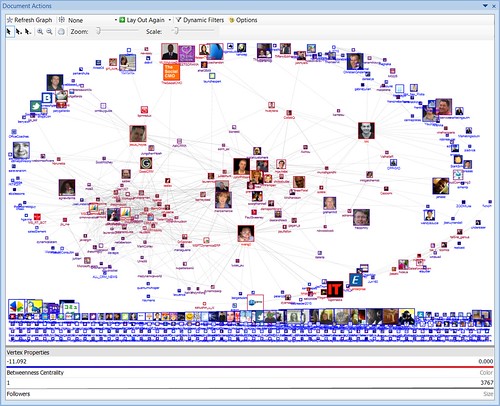
2010 - April - 25 - NodeXL - Twitter - crm betweenness color 

Salesforce and Microsoft CRM Dynamics are both great solutions but when considering 'generic' CRM systems, it is easy to think that they are the only "CRM systems" available to UK charities, which of course is not the case: there are dozens of similar(ish) systems on the market - and there are of course fundraising database packages. That said, there are some CRM systems which are either more oriented towards the NFP sector or where a supplier has specifically created modules for charities, or where one or more business partners have taken the sector seriously enough to have made an impact with what they can provide, and it is those systems which I thought it would be useful to list here for awareness:
  • CiviCRM: CiviCRM has been designed specifically for the NFP market with appropriate functionality and ethos, and is almost certainly the NFP sector's leading open source CRM system, offering collaboration and joint development. And because it is not oriented at just one "type" of solution for charities (i.e. not just service delivery, not just case management, not just fundraising, volunteer management etc) it has a degree of flexibility similar to that which the CRM solutions also offer, if maybe not quite so in-depth. It has a great ethos for charities, and an ever-growing and broadening community using it and supporting other users. And by its very nature it tends to attract users and developers who believe in not just the software but the whole open source approach. But the fact it is not driven by a commercial organisation means that when statutory or regulatory requirements change, then a user and/or the community needs to get the software updated to manage that.
  • Workbooks.com: Workbooks has gained several UK clients in the membership sector and are offering their solution to charities too. It is a web-based (SAAS) solution designed for small and mid-size businesses, so in terms of solution size their NFP offering should fit many charities. Unlike Salesforce/Dynamics, they (primarily) sell direct to end-user organisations.
  • SugarCRM: Sugar has an open-source and a paid-for commercial offering and has had some adoption with charities and the public sector, partly due to its cost structure but partly because it is a decent system with an especially good interface. It can be hosted or run on-premise and is sold and implemented through a partner network. It has perhaps not made inroads into the sector quite as much as the other systems.
  • NetSuite: A large, CRM vendor in the US, they have created NetSuite.org which is the corporate citizenship arm of NetSuite. They offer product donations, pro bono programs and social solutions to charities and NFPs. Not yet as well adopted in the UK compared to North America.
  • Siebel and Oracle: For the largest charities…
  • And a few others which I know some charities have used:
    • Zoho: Free and paid-for versions of their CRM and other online apps.
    • Sage CRM (what was ACT! years ago) has a Windows and a SAAS solution. 
    • Highrise CRM: SAAS software from the people who brought you Basecamp (although more oriented to contact management and maybe service delivery than fundraising).
As I said above, there are of course many other CRM solutions including a number which appear on Gartner's Magic Quadrant which do well in the commercial sector but which (to my knowledge) don't have any charity implementations. It will be interesting to see if any such systems start to also move into the sector and if any of those in the above list can challenge Salesforce and Microsoft CRM with leading sector offerings.

Sunday, March 16, 2014

Salesforce: Why does one person love it and the next hate it?

Why have I written this post?
A few years ago I wrote a blog post called The Raiser's Edge: Why Does One Person Love it and the Next Hate it? Importantly, it wasn't about The Raiser's Edge per se, but it reflected my opinions on all similar fundraising packages - but I used RE as the key example because of its popularity. So, as I decided it was about time to update that post, I also thought I should make it a bit more contemporary and apply my thoughts to the well-liked generic CRM systems - and therefore, this time, use one of the currently most popular and most discussed CRM systems as my headline: Salesforce. But as before - let me emphasise - the points below are not solely about Salesforce; they could be just as true for other, similar CRM systems used by charities today: Microsoft CRM Dynamics, SugarCRM, Workbooks, NetSuite and so on.

I've also written this post because one of the most commonly repeated LinkedIn Discussions/Questions is: What Cloud CRM System Should I Use for my Charity? And then the questioner gets lots of answers about individuals' experiences and beliefs (and even the odd salesperson saying how great their system is…). And I wanted to provide what I hope is a more rounded, independent answer.

As before, with my Raiser's Edge post, I am sure that plenty of people will agree/disagree with my points below - and that's fine! If you want to discuss them then please do so in the Comments.

So, let's get to it:

Why do I think that one person you talk to will love Salesforce (et al) and the next person will hate it?
  • Configuration and Flexibility: One of the most important things about these CRM systems is that they are so flexible, configurable, customisable and extendable, and as a result one implementation may be completely different from the next, even if they are both addressing the same core fundraising functional requirements. It is of course fantastic that this can be done, and if it is done well then anyone using that particular implementation may well love it. But if not, if it didn't deliver what was promised - or perceived to be promised - if it took too long, cost too much and it seemed like it was still not giving someone what they really wanted, then it is hardly surprising that such users will not like it. It's the double-edged sword of such flexibility.
  • The start of the project and then the on-going bit… Following on from the above, it is also quite feasible that the CRM system was implemented well in the first place, and the users liked using it at that point. But for any number of reasons thereafter (e.g. budget, lack of impetus, lack of resources, the wrong resources, lack of understanding of CRM systems), it may not have been maintained well at some sites, and thus its usage at such charities could have dwindled and the users became disillusioned. And this is because if the CRM system was developed for the charity as its needs were at that time, then it is quite feasible that those needs may change over time. The good charities, the good Salesforce users, know this. But that's not everyone.
  • Cost of Start-up and perceived TCO: Salesforce provides 10 free licenses for charities and heavily discounts others thereafter; Microsoft also gives charity discounts for Dynamics; SugarCRM has an open-source option. So it can appear to the less well informed user that the software is free or very cheap. And why wouldn't you think that if you didn't know! And yes, this is a great thing because you can then spend your budget on key things like development, training, consultancy, implementation, data cleaning and so on. Critical things. Unfortunately, although the licenses are free/cheap, the design, development, resources needed and maintenance are not - they cost money, and carry on costing money. And if a charity is not aware of that, or unprepared, or thinks the CRM will do all they need without any of the above, then what did seem a low cost option suddenly is not.
  • Ease of Start-up and Type of User: Salesforce in particular is very easy to start to use: sign-up to a free trial, then buy the licenses (or get them free) and Bob's your uncle (or rather, Marc). No hardware issues, no need to deal with your IT department, no need to talk to any pesky salespeople (!) And Microsoft also offer a similar SAAS option now. Again, all that offers great benefits - it's the Cloud at its best. But it also means that anyone - database-savvy and the non-savvy alike - can start to use Salesforce, regardless of their database or CRM knowledge, their understanding of what it can do, of what you have to do to run such systems well. You would never get that with a "traditional fundraising database" - which shows one of their downsides and conversely their benefits at the same time. But if anyone can start to use Salesforce et al so easily, then there are bound to be people who don't really get it and therefore ultimately won't like it.
  • Different types of usage: All these CRM systems are now extremely flexible and can be used for a multitude of applications: fundraising, membership, client management, grant management, help desks, HR needs, (even sales!!) and many more areas of need. It's a really great thing about the systems and shows just what you can do with them. But if charity X has used it for membership management and says how great their implementation is, then charity Y, who wants to use it for grant management may not realise that it might not be so applicable for them or that they need to address it differently. And that can also lead to disillusionment.
  • The Salesforce and Dynamics fundraising/membership 'templates': Just to add to the complication of some of the above, there are now a number of good and getting-better 'templates' which third-party companies have designed to manage fundraising and membership almost out-of-the-CRM-box. So, not only do you now have the CRM system with all its pros and cons, you have another layer to consider which also offer benefits and downsides. But some people will still think of it as Salesforce, Dynamics etc. On the plus side, if a charity is using template X, then it can at least say how good/bad that template is, and other charities can get some feel for it that way. On the downside, such templates are just starting points which many charities will adapt and enhance which again will lead to differences of implementation; and ironically, as the templates become more package-like, so you then get the potential issues arising which I listed in my original Raiser's Edge Why Does One Person post. Plus ca change…
  • Data, People, Processes (even hardware…): And of course, regardless of everything I have written so far, even if you have the best possible CRM system, it still doesn’t matter a hoot if your data is rubbish, your users not trained, your processes not defined, your project management and implementation managed badly… and so on. All the things I bang on about so often in my other blog posts. As such, charity X, who has a great system with great people managing it and who really understands CRM, will indeed have the potential to have a great CRM system. Unfortunately, even if you gave exactly the same system and configuration to charity Y, who doesn't get CRM, data management, the need for investment in training etc, then that system will soon be hated by its users. Oh, and if you do buy a CRM system which you can install on-premise/hosted, then the hardware still needs to be up to scratch. And yes, this is exactly the same for Traditional Fundraising Databases as well. But just because you buy a CRM system, that doesn't mean those issues disappear.
  • Marketing and the Buzz of the Cloud: Finally, there is also no doubt that some CRM systems are helped by excellent marketing and the belief by some people that the Cloud is the answer for all their needs. The Cloud may well be an answer for some of some people's needs, but it's not quite as simple as that. Personally, I believe that if a system can't provide what you need it to do operationally - say, direct debit management, gift aid, income processing etc - then it doesn't really matter if it's in the Cloud or not. There's no point buying something that isn't right for you even if it does have superb technology (which many of these CRM systems do!) But the CRM suppliers/partners have great marketing staff!
Interestingly, having just re-read all the above myself, it's clear that in some ways some of the above points could apply to The Raiser's Edge and similar systems as well, as some are indeed generic database pros/cons; i.e. different types of user, the start of a new system vs n months/years down the line, ignorance about costs and so on. But it's the specific attributes and differences and approach of the CRM systems that make all these points especially poignant for Salesforce and the like.

Tuesday, May 01, 2012

Is There Any Need to Develop Bespoke Database Applications anymore?

bespoke
I was interested to see a recent article on ComputerWorld which detailed how the charity, Freedom from Torture has developed a bespoke case management system because they couldn't find an off-the-shelf system which was suitable for their needs.

Now, I of course have no knowledge of the charity's requirements, so it might well be the case that they did need to develop their own system and it sounds as though they have ended up with a good solution for their needs.

But what is interesting is that, for database applications such as this, the bespoke approach is becoming a rare occurrence these days, primarily because of the flexibility, adaptability and affordability of many "generic" CRM systems which are now available to charities and NFPs.

The rise of the CRM system
I have discussed before on this blog how systems such as Salesforce, Microsoft CRM Dynamics, SugarCRM, civiCRM and others are all great solutions which, although they have their roots in sales and contact management from years ago, have progressed way beyond that now and have been enthusiastically embraced by the nonprofit sector worldwide (and by other vertical sectors too) because they can be adapted to so many requirements which are essentially based around contact management - but of course can provide so much more around that, be it fundraising and income, membership, volunteer management, case management and so on.

This is the case for large NFPs such as Barnardo's and the Alzheimers Society, who are both implementing Salesforce for their 'cause related' database, and there are many, many small charities who are using all these systems for all sorts of applications and requirements. And just recently, I was talking with a senior manager of another large UK charity who are considering using one of the above CRM systems for their entire volunteer management because it will be so much easier to do than write one from scratch - and that will support part of their core work.

There are also many examples of companies who have developed 'templates' for various charity requirements on these CRM systems - and I know of at least two companies (HomelessLink and Vera Solutions) who have developed case management systems based on the Salesforce platform.

The Probable Decline of Bespoke Database Developments...
So whilst I appreciate that bespoke database solutions are not going to disappear overnight, and there may be good reasons and occasions when they could be right to use - and I am sure that there will still be thousands of Microsoft Access implementations in the sector for years to come - I would still almost always at least consider first if a charity could use a generic CRM system as the benefits are so great: speed of implementation, flexibility, third-party apps and tools, reporting, email integration are just a few which immediately spring to mind; plus, importantly, a better chance of future-proofing (and future enhancements) and, of course the bottom line, they can very well be more cost-effective.

Wednesday, February 15, 2012

What should you do if you really have zero budget for a new CRM or Fundraising database?

As much as I always promote having an appropriate budget for your fundraising or CRM database, and as much as I try to enforce the understanding that free software doesn’t mean zero cost, I also realise that sometimes, in particular for smaller charities of course, you just don’t have a budget for a new system. So what should you do then?

Below are the key things I believe you need to consider and act on in such circumstances. They won’t cost you anything except your time and attention. Although even with that said, I struggle to truly say the whole implementation will be free. There are always additional costs: you will still need PCs, an internet connection, probably hosting for your database, maybe additional software and so on – so you either need to have a great benefactor or be a great fundraiser/negotiator, otherwise you will still need to spend money on those things.

Do note that these tips are primarily aimed at organisations who really don’t and cannot expect to have an appropriate budget for their database – so if you are a charity of any reasonable size but you are struggling to acquire a budget for a new system then, even though the following may help you, my first piece of advice is to re-visit your business case and determine why it isn’t deemed to be so important at your organisation. There is no point – for any size organisation – in getting any system, free or paid-for, which is not right for you, even if it is the cheapest one, even if it is free.

1. Get the basics right before you start looking for a new system
Remember that any database software is an enabler to help your fundraising strategy. Ensure you know what your strategy is now and for the next few years in order that you will know which CRM system is appropriate for you and what you need from it. And remember too that the database software is only one aspect of any database implementation – don’t think that you can just install a database and that will solve all your answers! i.e. a database is only as good as the data in it (i.e. how you collect it, data consistency/accuracy etc), it will only be used as well as your staff are trained to use it and with appropriate processes, and you will still need fast enough hardware and, if appropriate, a fast enough internet connection.

2. Treat your process for getting your new system as a ‘formal procurement process’, even if you’re not spending any money on it
I would still advise you create a document showing your requirements, I would still advise you research and find out about possible suppliers and, if appropriate, people who can help you (see below), even try prototyping one or two of the systems (assuming they're free, c.f. below), create a plan, engage the rest of your organisation and so on. Don’t just start using the first free system you find just because it is free.

3. Ideally, use a well-used package or CRM system – not a bespoke development
One of the key problems which charities have suffered from over the years is when a (well meaning) volunteer or “someone’s friend” has created a bespoke database in Access/Filkemaker etc. The problem with this is that they may not be around forever, they won’t necessarily understand your needs and they are re-inventing the wheel.

I would therefore look at systems such as Salesforce (free for the first 10 users), Zoho, CiviCRM, SugarCRM. They will all need time and assistance with setting up (see below) but they are all good, established systems; and they all have good online communities to help you. This means that if you or any other key people in your organisation leave in the future, then someone else will be able to pick-up your implementation much more easily than if it was a bespoke development. And you will get support and future enhancements. They are also good systems so that if in the future you increase your needs (and budget) then you will be able to build on them potentially without needing to change system again.

4. Keep it simple
Complexity (and over-complexity) brings cost. If you are looking for a free system then I will generally assume you do not need sophistication. If you do require more advanced solutions then free may not be right for you. So keep it simple: it will be quicker to implement, easier to use, easier to support and change in the future and you will get better results. And that has to be your ultimate goal.

5. If you don’t understand databases, don’t set it up yourself
Whilst I normally don’t advocate the use of volunteers for any significant database implementation, if you have never used a database before or you don’t know best practises in this area or what they can really do for you, then find someone who does and get them to help you. You may have a database-savvy staff member in which case they may be able to help. Otherwise/additionally, there are a number of places you can find free support and assistance from professional IT staff, including IT4Communities, the Do-it Volunteering database or even the WCIT. Or for really small charities, maybe even approach your local college for students requiring work experience? And don’t forget your trustees for contacts and input!

6. Document everything – the configuration of your new system and your processes
During and after the implementation, if you get someone to document what they have done then anyone else following them will be able to make changes and support your databasse much more easily. If you get someone to create proper, written down processes for you, then you will be able to use the system more efficiently and your current and future new staff can be trained.

7. Commit to the project
I have come across too many organisations who have started to use a free database without really committing to it, and in no time it has become a white elephant (all be it a no/low-cost one). But that won’t help you, your charity, your fundraising or ultimately the cause you are trying to support. So don’t think that just because you are spending no money on it, it will all work beautifully, immediately, first time and without any of your time. You won’t be able to press one button and get the database to tell you who are your best donors, or send a targeted email campaign or find out who you should be speaking to next week if you don’t do the groundwork. Sorry! Commit - it's really worth it.